Business Development

Find the opportunity.
Shape the next move.

Connect your ambition with customers, commercial choices and the capabilities to move forward.

An illustrative view of a commercial district, introducing a film about business opportunities
01 / ContextSee the wider opportunity.
Start with the business question.

Explore what could work, what it depends on, and what is worth learning next.

How we help

Growth is a set
of connected choices.

Explore six areas of support. One business question may connect several of them.

01 / Strategy & growth choices

Where is the next opportunity worth pursuing?

Connect business ambition, market context and portfolio priorities before committing resources.

01Ambition02Options03Priorities
  • Growth options & market entry
  • Portfolio priorities & strategic choices
  • Digital and sustainability opportunities
Possible output

A growth-options brief and a prioritized opportunity map.

Shape a growth brief
02 / Markets, customers & offers

Which customer need could we serve better?

Explore segments, competitive alternatives and the value an offer could create for the customer.

01Customer02Need03Offer
  • Customer & market insight
  • Value proposition & positioning
  • Product and service opportunities
Possible output

A customer-opportunity map and an offer hypothesis to test.

Connect the customer choices
03 / Marketing, sales & channels

How will customers discover, choose and return?

Connect positioning, pricing, marketing, sales and service across the route to market.

01Reach02Choose03Return
  • Channel & partner strategy
  • Pricing & revenue logic
  • Sales process, digital commerce & customer experience
Possible output

A go-to-market outline with commercial priorities and useful measures.

Explore the route to market
04 / New business & partnerships

What would make the new idea a workable business?

Develop the business-model logic, consider build or partner options, and identify what to learn first.

01Idea02Model03Test
  • New ventures & adjacent offerings
  • Business-model options
  • Partnerships, alliances & acquisition rationale
Possible output

A business-model outline, partner criteria and an initial learning plan.

Explore an illustrative blueprint
05 / Processes & business enablers

What needs to work behind the growth idea?

Review the workflows, responsibilities, information and resources that support an expanding business.

01Workflows02Resources03Readiness
  • Commercial-to-finance handovers
  • Reporting, controls & delivery-model options
  • People, data & technology requirements
Possible output

A process and responsibility map with priority gaps to resolve.

Connect the people requirements
06 / Resilience & strategic scenarios

How could the choice hold up as conditions change?

Consider exposure, dependencies and alternative actions alongside the opportunity.

01Change02Exposure03Options
  • Demand, cost & partner scenarios
  • Business continuity & concentration questions
  • Early signals, decision ownership & review points
Possible output

A scenario brief with assumptions, signals and response options.

Explore a scenario

Possible study topics and documents. Scope and priorities are agreed for each engagement.

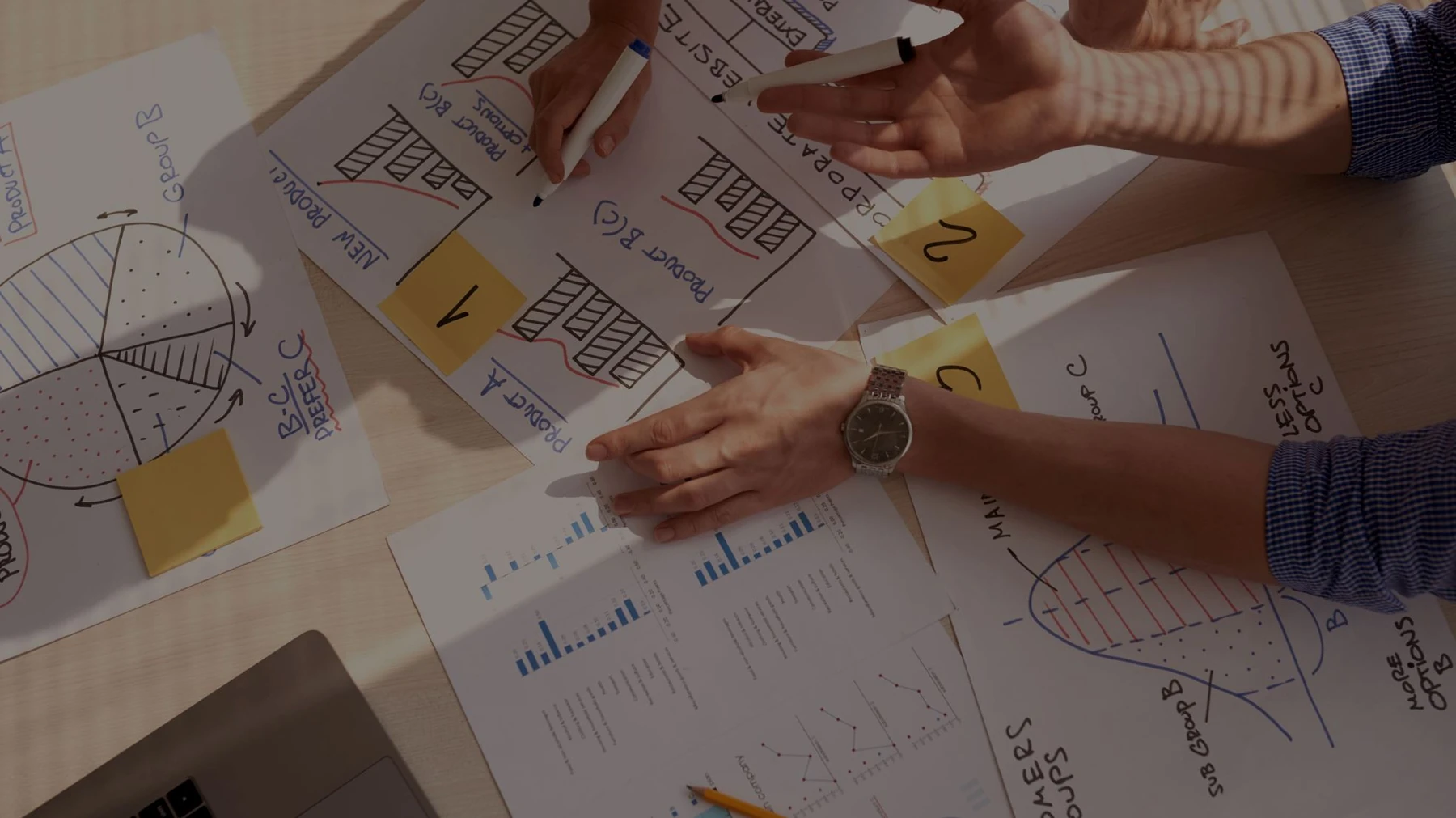
A business discussion using simple concept cards and a paper prototype
Make the business idea relevant to the people it serves.
Customer & commercial choices

Start with the need.
Connect the choices.

A promising idea becomes clearer when the customer, offer and route to market fit together.

NeedOfferRoute
An example of market thinking

See the market from eight angles.

Select an angle to explore the question, useful information and a possible study document. The angles connect with one another; they are not a fixed sequence.

Select an angle. Use Arrow keys to move between questions.

01 / Customer need

What would make the customer's work or life easier?

Look for a task, problem or unmet need that matters enough for the customer to consider a different solution.

Useful information
  • Customer conversations or feedback
  • Examples of recurring tasks and frustrations
A possible study document

A concise customer-need statement with evidence and open questions.

Connect the choices in a blueprint
02 / Priority customers

Who should this idea serve first?

Compare customer groups by their needs, buying decisions and how well the idea could fit them.

Useful information
  • Known customer groups and buying roles
  • Evidence of need, access and fit
A possible study document

A customer-group comparison and a proposed initial focus.

Connect the choices in a blueprint
03 / Offer value

Why would a customer choose this offer?

Connect the offer's features with a clear customer benefit and identify what would need to be demonstrated.

Useful information
  • An outline of the proposed product or service
  • Benefits customers value and concerns they raise
A possible study document

A value-proposition outline with claims to test.

Connect the choices in a blueprint
04 / Current choices

What does the customer use instead today?

Compare competing offers, in-house work and doing nothing to understand the customer's actual alternatives.

Useful information
  • Available information on alternative offers
  • Customer reasons for choosing or staying
A possible study document

An alternatives comparison and potential points of difference.

Connect the choices in a blueprint
05 / Access routes

How could customers find, buy and use the offer?

Explore direct channels and partners alongside the support customers would need before and after buying.

Useful information
  • Current sales channels and customer touchpoints
  • Potential partner roles and channel requirements
A possible study document

A route-to-market outline with channel and partner questions.

Connect the choices in a blueprint
06 / Delivery fit

Could we deliver the offer on workable terms?

Check the skills, resources and dependencies needed to deliver, alongside the basic revenue and cost assumptions.

Useful information
  • People, skills and capacity available
  • Indicative price and cost-to-serve assumptions
A possible study document

A capability-gap map and a commercial-assumptions brief.

Connect the choices in a blueprint
07 / Market context

Where might there be room for this idea?

Consider demand, industry structure and access conditions to understand where an opportunity may exist.

Useful information
  • Available market and industry information
  • Observed demand patterns and access barriers
A possible study document

An opportunity outline with evidence gaps and assumptions.

Connect the choices in a blueprint
08 / Change signals

What could change the opportunity or its timing?

Consider shifts in customer behaviour, technology and business conditions, then identify signals worth watching.

Useful information
  • Relevant changes in demand, technology or conditions
  • Business dependencies and decision dates
A possible study document

A short watch list with assumptions and review points.

Connect the choices in a blueprint

An illustrative discussion aid. Evidence, scope and the next decision are agreed for each study.

Make the idea visible

From a growth idea
to a business model.

Six questions to connect the idea with how it could work. Explore three illustrative starting points.

Business blueprint

A clearer offer for a defined customer.

Illustrative example
01

Who

The customer

Existing business customers

02

Need

The task or problem

A recurring need is underserved

03

Offer

The value proposition

An improved service package

04

Reach

The route to market

Account teams + relevant channels

05

Deliver

The required capabilities

Current skills, workflow and capacity

06

Economics

The commercial logic

Price, cost-to-serve and repeat demand

What we would still need to test
Customer relevanceWillingness to payDelivery capacity
Business blueprint

A new service, with assumptions to test.

Illustrative example
01

Who

The customer

A selected new customer segment

02

Need

The task or problem

A task current alternatives leave difficult

03

Offer

The value proposition

A focused new service concept

04

Reach

The route to market

Selected direct or partner channels to assess

05

Deliver

The required capabilities

New skills, tools and delivery requirements

06

Economics

The commercial logic

Revenue model, starting costs and demand

What we would still need to test
Evidence of needCommercial logicRequired resources
Business blueprint

Complementary strengths. Clear responsibilities.

Illustrative example
01

Who

The customer

Customers both organizations could serve

02

Need

The task or problem

A need requiring combined capabilities

03

Offer

The value proposition

A joint proposition with defined roles

04

Reach

The route to market

Agreed referral or partner channels

05

Deliver

The required capabilities

Partner fit, handovers and governance

06

Economics

The commercial logic

Commercial terms, shared costs and exposure

What we would still need to test
Partner fitCustomer ownershipDependency risk

Discussion examples, not forecasts, client cases or pre-approved business plans.

What you could take away

Make the thinking useful.

A study can bring evidence, choices and open questions into documents your team can discuss.

Illustrative business colleagues reviewing shared information

From information to choices.
Illustrative business discussions.

Opportunity brief

Which opportunity deserves a closer look?

Bring the business question, relevant evidence and possible options into a short decision brief.

  • QuestionThe opportunity and the decision it could support.
  • EvidenceWhat is known, where it comes from and what remains uncertain.
  • OptionsPossible directions and the trade-offs to examine.

Useful for aligning a discussion before committing to a deeper study.

Next discussion

Agree which assumptions need checking first.

Market & customer map

Where could the offer be most relevant?

Organize customer groups, needs, alternatives and routes to reach them, with evidence gaps made visible.

  • CustomersCandidate customer groups and the needs to understand.
  • ChoicesCurrent alternatives, possible offer fit and access routes.
  • GapsQuestions needing customer feedback or further research.

Useful for choosing where to focus customer learning.

Next discussion

Select a customer question and a practical way to explore it.

Growth priorities

What should we explore next, and why?

Compare opportunities against agreed criteria, required capabilities and uncertainty, then record the next learning actions.

  • CompareCriteria agreed for discussing relevance, effort and dependencies.
  • PrepareInformation or capabilities needed to examine the options.
  • NextLearning actions, discussion owners and a review point.

Useful for explaining priorities and keeping assumptions visible.

Next discussion

Agree the next action and when to revisit the choice.

Examples of possible documents. Format and depth depend on the question, available information and agreed scope.

Resilience & uncertainty

Explore the opportunity.
Question the assumptions.

Consider how the choice could respond to changing conditions before committing.

A scenario to discuss

What if customers change what they value?

Alternative paths to consider; no probability or outcome is implied.

01 / Watch for
Changing inquiries, buying patterns or customer feedback.
02 / Ask
Which offer or customer assumptions would need revisiting?
03 / Consider
Review the offer mix and test a different customer or channel focus.
A scenario to discuss

What if the cost of serving customers changes?

Alternative paths to consider; no probability or outcome is implied.

01 / Watch for
Changes in supplier terms, capacity needs or cost-to-serve.
02 / Ask
Which pricing, resource or delivery assumptions become sensitive?
03 / Consider
Compare pricing and delivery options, including the customer trade-offs.
A scenario to discuss

What if an important dependency becomes less reliable?

Alternative paths to consider; no probability or outcome is implied.

01 / Watch for
Changes in partner capability, terms or service availability.
02 / Ask
Where is the business dependent on one organization or route?
03 / Consider
Consider alternatives and agree who reviews the dependency and when.
Working together

A focused question.
A useful next decision.

Bring the ambition, one example of the challenge and the information already available.

  1. 01

    Frame

    Agree the question, decision and evidence needed.

    Focused study brief
  2. 02

    Explore

    Review insight, compare options and discuss assumptions.

    Options and evidence
  3. 03

    Decide

    Document priorities, open questions and the next learning step.

    Decision and action outline
Bring us your business question

Start with one sentence.

Choose the closest starting point. Use the outline to prepare a conversation with your team or OSVARD.

Bring this outline into a conversation with your team or OSVARD.

A little more clarity.

Can we start with one growth question?

Yes. The starting point can be a customer segment, an offer, a sales route, a partnership or a strategic choice. We agree a focused scope around the decision you need to make.

Do we need a finished business plan?

No. Start with what you have. We can identify assumptions and evidence gaps before developing a fuller outline.

How does this connect with finance and other expertise?

Commercial logic may need financial analysis, industry understanding, people planning or digital insight. These connections are scoped with you. Where needed, we agree how to involve appropriate specialists for transaction, tax, legal or compliance questions.

What might the work produce?

Depending on the brief: opportunity maps, customer insights, business-model or go-to-market options, process maps, scenario notes and a prioritized decision outline. Your team owns the subsequent business decisions and agreed actions. Explore three document examples.

Learning & development

Turn commercial insight into
team capability.

Explore learning that connects market understanding, customer needs and the practical choices behind business development.

  • Market understanding
  • Commercialization
  • Business decisions

OSVARDCompetency

Learning pathways and programmes shaped around your team's priorities.

Explore related learningDiscover OSVARD Competency
Let’s start a conversation

A useful starting point.
A conversation away.

Tell us about the growth question on your agenda. Let’s explore a useful starting point together.

Talk to OSVARD
Two professionals exchanging ideas in a bright workplace lounge

Stay connected to new perspectives.

Ideas and insights from OSVARD.