
Industries & Operation

Better processes.Stronger operations.

Connect industry context, technology choices and operating realities. We help turn complex questions into clear options and a practical basis for your next decision.

From process development to operating priorities.
How we can help

Different settings.
Connected questions.

From process-based businesses and manufacturing to service and support operations. Explore the question that matters to you.

Start with your operating context. Agree the question, the information available and the scope of analysis before choosing a study.

Bench-scale glass reactor and compact stainless equipment in a process-development laboratory.
Technology & scale-up
Focus area / 01

What needs to be understood before the next scale-up step?

Connect chemistry, process development and technology choices with the evidence needed to move forward.

  • Technology benchmarking, integration, process synthesis and formulation questions
  • Simulation, heat and material balances, and process intensification
  • Pilot-test priorities, scale effects and commercial-readiness questions
Useful information & possible outputs
Useful starting information
Product and capacity objectives, experimental results, process conditions and the technology alternatives under consideration.
A possible agreed output
A technology-options comparison, development assumptions and a prioritized scale-up study or test brief.

Hands reviewing a simple process-flow sketch and workflow cards beside a production workspace.
Operating performance
Focus area / 02

Where does the process lose time, quality or resources?

Make the operating picture clearer by examining flow, variability and the conditions behind performance.

  • Process bottlenecks, handoffs and avoidable rework
  • Yield, quality, energy and utility-use patterns
  • Practical improvement options and measures to track
Useful information & possible outputs
Useful starting information
Process maps, production or service records, quality observations, resource-use data and your team’s explanation of the issue.
A possible agreed output
A performance review connecting observations, possible causes, information gaps and improvement priorities.
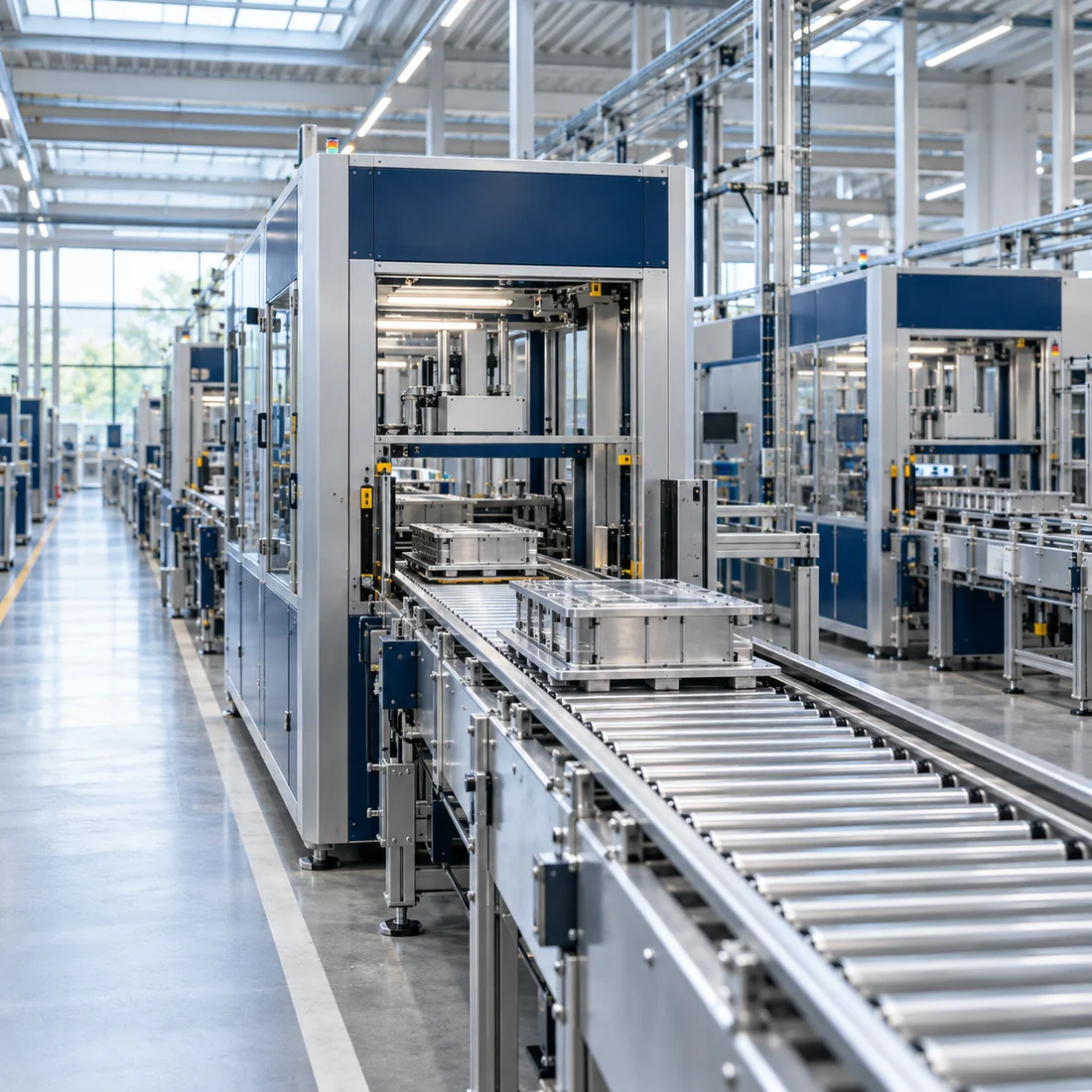
Modular production equipment and a roller conveyor in a clean manufacturing hall.
Manufacturing & capacity
Focus area / 03

Which production option fits the demand and constraints?

Compare capacity choices in the context of product mix, equipment, reliability and operating readiness.

  • Capacity, product mix, make-or-buy and production-footprint choices
  • Equipment use, maintenance needs and quality requirements
  • Workforce, safety and supply dependencies
Useful information & possible outputs
Useful starting information
Demand assumptions, product specifications, available capacity, operating schedules and equipment or reliability information.
A possible agreed output
A capacity-options study with trade-offs, dependencies and questions for technical and financial review.
Illustrative warehouse racks and cartons moving along a roller conveyor.
Supply chain & sourcing
Focus area / 04

How do supply choices affect continuity and cost?

Look at purchasing and material flow together, from supplier dependencies to inventory and delivery needs.

  • Supplier options, spend requirements and sourcing trade-offs
  • Inventory, logistics, lead times and material availability
  • Disruption exposure and continuity priorities
Useful information & possible outputs
Useful starting information
Supplier and purchasing information, material requirements, lead times, inventory records and known delivery constraints.
A possible agreed output
A supply-options review and a dependency map showing where further evidence or contingency planning is needed.
Illustrative professionals reviewing a service-request workflow on a desktop screen.
Service & support operations
Focus area / 05

Where can a clearer workflow improve the service?

Apply process thinking to customer-facing services and internal support, as well as physical production.

  • Request flows, queues, handoffs and customer experience
  • Shared services, role clarity and avoidable repeat work
  • Process simplification before choosing automation
Useful information & possible outputs
Useful starting information
A sample workflow, request volumes, waiting or response times, responsibilities and recurring issues.
A possible agreed output
A service-process map with friction points, proposed priorities and the information needed to assess changes.
Illustrative comparison of two industrial-site layout models with planning worksheets.
Capital & industry choices
Focus area / 06

Which option deserves the next investment study?

Connect industry context and customer needs with process, resource and capacity choices.

  • Market needs, competing technologies and product life-cycle questions
  • Capacity, location, modularity and make-or-buy alternatives
  • Capital, operating-cost and regulatory assumptions
Useful information & possible outputs
Useful starting information
The business objective, market and demand assumptions, competing options, site or operating constraints and available cost information.
A possible agreed output
An options comparison and operating assumptions to carry into a Financial & Feasibility study.
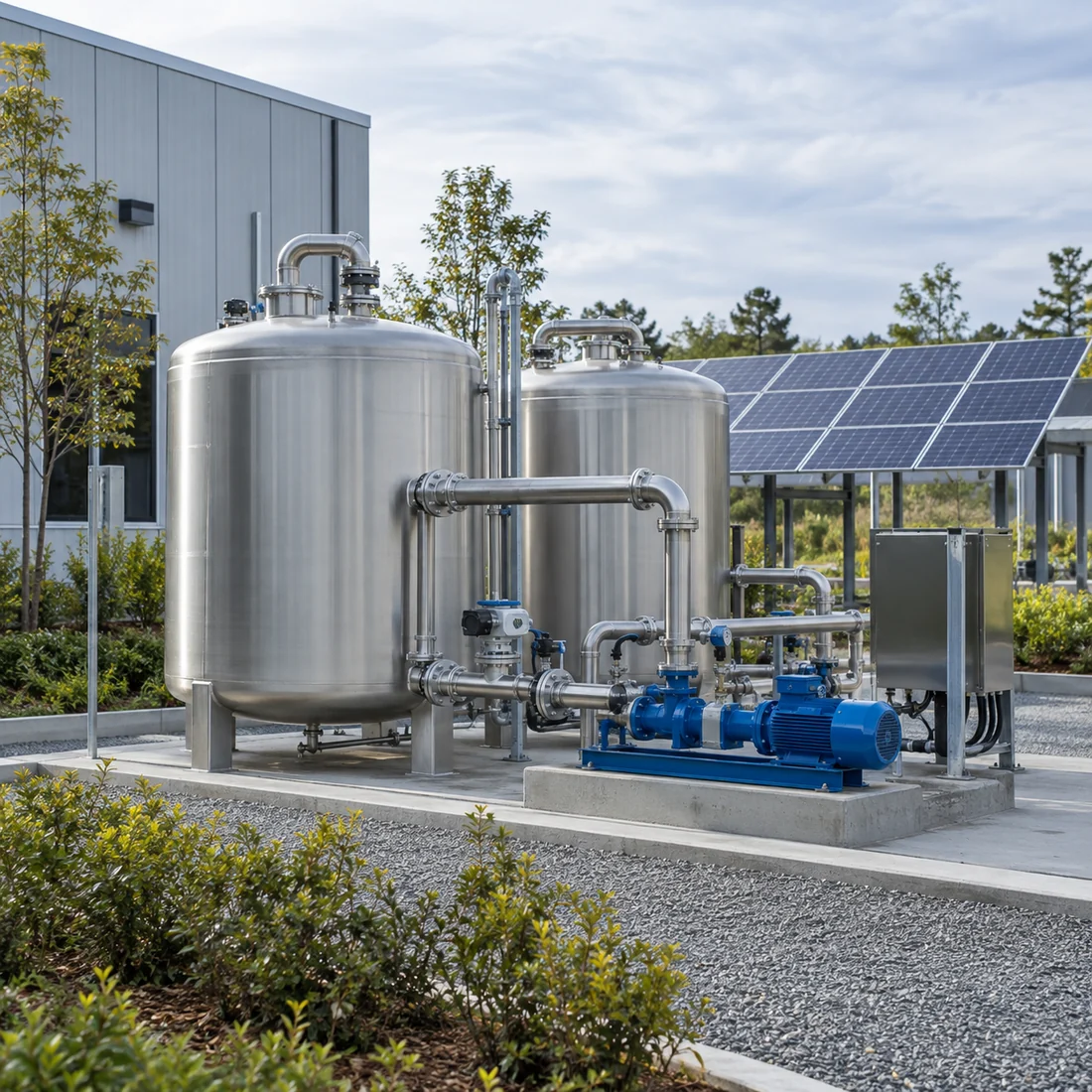
Illustrative water recirculation tanks, a utility pump and nearby solar panels.
Sustainability & resilience
Focus area / 07

Which resource pressures and risks should shape the plan?

Examine operating choices through energy, materials, environmental dependencies and business continuity.

  • Energy efficiency, heat integration, utilities and emissions questions
  • Materials, water, waste, circularity and nature-related dependencies
  • Physical climate exposure, transition pressures and lower-impact market opportunities
Useful information & possible outputs
Useful starting information
Energy and material records, relevant emissions information, supply or site exposure and the boundaries of the question.
A possible agreed output
A scoped resource-and-risk opportunity map, with priorities and information needed for specialist assessment.

Industries

Your industry.
A clearer next step.

Explore how your industry context shapes the question, the information needed and a useful study.

A connected consulting perspective

Bring together the technical, operational, digital and organizational questions that matter to your business.

Choose an industry to explore the questions and possible study outputs.

Discuss your industry
PetrochemicalFeedstock & integrated processes

Which process route best fits our feedstock, product and capacity assumptions?

Connect hydrocarbon feedstocks, conversion routes and integrated process networks with the technology, capacity and operating questions that shape petrochemical development and production priorities.

Examples of questions we can explore

  • Which combination of feedstock and process route fits the intended product and capacity?
  • Where do shared utilities or connected units constrain the operating options?
  • What evidence is needed before the next development or scale-up decision?

A possible study output

An options study connecting feedstock assumptions, process routes, capacity requirements and utility needs, with uncertainties and priorities for further studies.

Useful starting information

  • Feedstock & product requirements
  • Process & utility maps
  • Operating & development records
Oil & GasProcess & operating choices

What should we understand before changing capacity or an operating approach?

Bring clarity to operating and development decisions across oil and gas activities by examining process performance, equipment needs, resource use and operational information.

Examples of questions we can explore

  • Which process or equipment constraint most affects the operating priorities?
  • How do development options differ in capacity, utilities and resource needs?
  • Where do maintenance, supply or team handoffs need clearer coordination?

A possible study output

A focused operating review or scenario comparison documenting constraints, resource requirements, information gaps and practical questions for the next decision.

Useful starting information

  • Process & equipment basis
  • Production & maintenance records
  • Development & resource assumptions
ChemicalsDevelopment & production

What evidence do we need to move from development to a larger scale?

Explore how chemistry, product requirements and process choices connect, from formulation and development studies to scale-up planning, manufacturing performance and efficient use of resources.

Examples of questions we can explore

  • Which formulation or process option meets the intended product requirements?
  • What do available experiments reveal about reaction, separation and equipment needs?
  • Which scale effects or data gaps should the next study examine?

A possible study output

A development or scale-up study documenting the process basis, option comparisons, data gaps and tests needed to examine the next step.

Useful starting information

  • Product & formulation requirements
  • Experiment results & conditions
  • Process basis & scale-up objectives
PharmaceuticalsProcess & workflow studies

Which process and information gaps need attention before our next development stage?

Clarify process and data questions across development and scale-up, with documented studies of material flows, equipment options, team handoffs and the information supporting production planning.

Examples of questions we can explore

  • What do existing development data reveal about the next scale-up step?
  • How do material flows, equipment needs and capacity assumptions fit together?
  • Where do process records or team handoffs leave important information gaps?

A possible study output

A process or workflow study summarizing available evidence, equipment and capacity considerations, information gaps and agreed questions for specialist review.

Useful starting information

  • Process & development evidence
  • Material flow & capacity assumptions
  • Anonymized workflow examples
Industrial & ManufacturingCapacity & production flow

Where is capacity constrained, and which option deserves closer examination?

Link demand, production capability and operating priorities through studies of product mix, equipment capacity, materials, maintenance and the way work moves across your organization.

Examples of questions we can explore

  • How does the product mix affect available production capacity?
  • Which equipment or process step limits flow under current demand?
  • Where do material movements, maintenance or repeated work need closer study?

A possible study output

A capacity and operating study comparing scenarios, identifying process constraints and documenting resource assumptions, improvement options and priorities for further review.

Useful starting information

  • Product mix & production maps
  • Output & downtime records
  • Materials & maintenance information
Financial ServicesCustomers & service workflows

Where do customers and teams encounter unnecessary delays or repeated work?

Understand how customers, people and information move through financial services operations, then examine opportunities to simplify workflows, clarify responsibilities and use operational data more effectively.

Examples of questions we can explore

  • Where do customer requests encounter delays or repeated handoffs?
  • Which recurring tasks have clear enough inputs to examine digital support?
  • How do team responsibilities and service measures fit the operating model?

A possible study output

A review of service workflows and the operating model, documenting customer friction, information needs and improvement priorities for management to consider.

Useful starting information

  • Anonymized customer journeys
  • Request volumes & waiting times
  • Roles & operational data
EducationLearners & service capacity

Which service or resource gap most affects the learner experience?

Connect learner needs with the services, people, resources and information that support education, using clear studies of organizational workflows, service capacity and practical operating priorities.

Examples of questions we can explore

  • Where do learners encounter gaps between admissions, support and administration?
  • How does service demand compare with available people, space and resources?
  • Which information handoffs or recurring tasks need simpler coordination?

A possible study output

A service and resource study mapping learner touchpoints, capacity assumptions, information gaps and priorities for improving coordination across the organization.

Useful starting information

  • Anonymized learner journeys
  • Service demand & resource availability
  • Roles & information handoffs
Energy, Utilities & ResourcesUtilities & resource dependencies

Which utility or resource decision could most improve our operating position?

Examine how energy, water, materials and resource dependencies shape operating choices, from utility performance and supply options to resource efficiency and resilience under changing conditions.

Examples of questions we can explore

  • How do energy and water needs compare with available utility capacity?
  • Which supply, recovery or efficiency option deserves a closer comparison?
  • Where do material dependencies or climate exposure affect operating resilience?

A possible study output

A study of utility or resource options, documenting demand, supply assumptions, efficiency opportunities, resilience questions and priorities for further technical review.

Useful starting information

  • Energy, water & material use
  • Utility capacity & supply arrangements
  • Resource dependencies & exposure

Study topics and documents are shaped around your question and agreed scope.

Technology development & scale-up

More than a
change in size.

As a process grows, mixing, transfer, controls, utilities and operating needs can change. Build evidence for the next stage.

Laboratory evidence
What this stage can help clarify

Understand the principle.

Explore chemistry, formulation, process behavior and repeatability under defined experimental conditions.

Evidence to carry forward

Experimental results, feed and product properties, and the questions a pilot needs to test.

Pilot evidence
What this stage can help clarify

Test what changes with scale.

Investigate mixing, transfer, control, variability and operating conditions using a defined test program.

Evidence to carry forward

Test objectives, equipment assumptions, operating ranges, data to capture and review criteria.

Demonstration evidence
What this stage can help clarify

Examine an integrated process.

Look at longer operation, product consistency, interconnected systems and evidence for the intended market.

Evidence to carry forward

Integrated performance records, product samples, utilities, waste handling and remaining uncertainties.

Commercial readiness evidence
What this stage can help clarify

Connect the process to the business.

Review how process evidence, demand, capacity and operating requirements fit the proposed business case.

Evidence to carry forward

Confirmed assumptions, technical gaps, supply and workforce needs, and inputs for investment review.

A learning pathway, not fixed volume thresholds. Test needs and stage boundaries depend on the technology and the decision. Commercial readiness means evidence for review; it does not replace detailed engineering or approvals.

What can a technology S-curve tell us?

Early learning, improving performance and maturity call for different questions. An established route may be refined; a new route needs evidence of its own.

Illustrative technology performance versus development effort. Actual paths differ; this is not a readiness forecast.

Technology benchmarking can compare performance limits, development effort and alternative routes. A new technology is not automatically the better choice.

What sits beyond the core process?

Inside battery limits (ISBL) generally refers to the core process facilities. Outside battery limits (OSBL) includes supporting systems such as utilities, storage and waste treatment.

Agree the actual boundaries. A scale-up comparison needs both the process and the support it depends on, alongside supply, people, safety and cost assumptions.

Explore the engineering pathway
An operating decision, made clearer

Compare the choices.
Understand the trade-offs.

Try a situation below. See the information behind two possible directions before deciding what needs a closer look.

Improve an established route or investigate an alternative?

Information to compare: Refine the current route and Explore a new route
ExamineRefine the current routeExplore a new route
PerformanceKnown limitations, consistency and achievable operating conditions.Bench results, comparative performance and what remains untested.
ResourcesExisting feed, utilities, waste and possible integration changes.Different feed, energy, materials and by-product assumptions.
EconomicsModification needs, operating costs and technology limits.Development effort, scale-up uncertainty and potential market fit.
Next evidenceTargeted experiments, simulation or an options review.A development basis and test plan before a larger commitment.

A technology comparison makes the differences and uncertainties visible before choosing the next test or study.

Increase capacity, improve the current operation, or source externally?

Information to compare: Improve or expand in-house and Source additional capacity
ExamineImprove or expand in-houseSource additional capacity
DemandDemand pattern, product mix and how long additional capacity is needed.Volume commitments, specification fit and service requirements.
ConstraintsBottlenecks, utilities, reliability, people and site limits.Supplier capacity, lead times, logistics and dependencies.
EconomicsCapital and operating assumptions, including supporting systems.Purchase, transport, inventory and continuity costs.
Next evidenceCapacity study and the technical basis for an investment comparison.Supplier and supply-flow review with defined requirements.

The useful comparison connects market need, total operating requirements and continuity—not just equipment size.

Simplify the workflow or add digital support?

Information to compare: Simplify the process first and Add targeted automation
ExamineSimplify the process firstAdd targeted automation
FlowHandoffs, unnecessary steps, queues and repeated work.Defined tasks, stable inputs and the points a tool would support.
PeopleResponsibilities, decision rights and customer needs.Ownership, skills, exceptions and adoption requirements.
EconomicsTime and effort behind current work, plus the cost of change.Setup, integration, operation and ongoing support assumptions.
Next evidenceA process map and prioritized changes to examine with the team.A scoped use case, data review and feasibility test.

Clear processes and appropriate tools can work together. Start with the problem and the evidence, then define the change.

Handle requests within product teams or use shared service intake?

Information to compare: Separate product-team intake and Shared intake and specialist routing
ExamineSeparate product-team intakeShared intake and specialist routing
Customer needsDifferent request types, specialist knowledge and customer contact preferences.Common entry needs, clear routing and access to specialist support.
FlowQueues within teams, transfers between products and repeated information requests.Intake steps, routing rules, exceptions and handoffs to specialist teams.
OwnershipResponsibilities and service measures within each product team.Intake ownership and accountability across the receiving specialist teams.
Operating effortTeam workload, repeated tasks and existing support requirements.Coordination effort, information needs and changes to roles or tools.

Useful next evidenceReview aggregated request volumes, anonymized customer journeys and existing handoff rules.

The next decisionAgree which service pathway needs a focused review before choosing an operating approach.

Compare customer access, team ownership and operating effort together. The approaches may be combined where the evidence supports it.

Add support capacity or adjust service hours?

Information to compare: Add dedicated support capacity and Reorganize support coverage
ExamineAdd dedicated support capacityReorganize support coverage
Learner demandRequest volumes, unmet needs and the types of support required.Demand by time, recurring peaks and learners' access preferences.
AvailabilityAdditional capacity and how it fits existing services and facilities.Opening times, appointment scheduling and coordination across support channels.
People and resourcesRequired skills, staffing assumptions and space or equipment needs.Existing team availability, responsibilities and scheduling constraints.
Operating effortStaffing, facilities and ongoing support assumptions.Coordination, scheduling changes and information needed to manage coverage.

Useful next evidenceReview aggregated demand by time, anonymized service feedback and existing resource availability.

The next decisionAgree whether the next study should examine additional capacity, different coverage or both.

Understand when learners need support and what resources are available before choosing a capacity or coverage change.

Illustrative questions, not client cases or a recommendation for your business. Your options, evaluation criteria and study depth are agreed around your context.

From question to a useful study

A practical view
of the next step.

Bring the question and the information you have. The work can be focused on one issue or connect several areas.

01 / Frame

Define the decision.

Clarify the objective, operating context and boundaries of the question.

Possible documentAgreed study brief and evaluation criteria
02 / Understand

Establish the picture.

Review available data, process information and the assumptions that need checking.

Possible documentProcess map, information review and gap list
03 / Compare

Examine the options.

Compare performance, resource needs, dependencies and relevant cost assumptions.

Possible documentOptions analysis and trade-off summary
04 / Clarify

Document the next move.

Make the findings, uncertainties and priorities useful for your team’s next decision.

Possible documentRecommendations and next-study priorities
Illustrative study output

See how the thinking is documented.

Explore a short example of a customer-service workflow review. Select a part to see what it could contain.

OSVARDSTUDY NOTE

Customer-service workflow review

How could incoming requests reach the right owner with clearer handoffs?

Illustrative example
Assumptions01 / 04

The basis to confirm.

This outline begins with three working assumptions:

  • Requests arrive through email and a web form.
  • Some requests pass between customer service and specialist teams.
  • Available records do not yet show every handoff or waiting period.
Information to check

Anonymized request records, current routing rules and team input would help confirm this picture.

Options comparison02 / 04

Two ways to organize incoming requests.

Compare ownership, visibility and exceptions before choosing an approach.

Shared intake and triage
Ownership
A triage owner assigns each incoming request.
Visibility
One shared queue shows requests awaiting assignment.
Exceptions
Agreed escalation rules route complex requests.
Channel owners with common handoff rules
Ownership
Each channel assigns a named case owner.
Visibility
A common handoff record shows who owns the next response.
Exceptions
Channel teams apply the same escalation criteria.

These are options to examine; the appropriate choice depends on the workflow and evidence.

Uncertainties03 / 04

Make the information gaps visible.

Three questions would need closer examination:

Are request categories defined consistently?
Review a representative set of records and agree how requests are grouped.
Where is waiting time visible or missing?
Compare available timestamps with the team's description of handoffs.
Which cases need specialist input?
Clarify exception criteria and ownership of the customer response.
Next decision04 / 04

Agree what deserves the next review.

Choose one request category with usable records and a clear owner for a focused workflow review.

  • Compare the two approaches using handoff clarity, visibility of waiting work and exception handling.
  • Agree which additional information is needed to assess the options.
  • Record the approach to examine next, the reason for it and the questions still open.
Possible next decision

Which approach should the team investigate first, and what evidence would make that comparison useful?

This specimen illustrates the structure of a study output. Actual topics and documents are agreed around the client's question.

Start with a clear scope.

Practical questions about the work and the information needed.

Do we need a complete data set to begin?

No. Begin with the decision you need to make and the information available. An initial review can identify gaps and help agree which records, documents, tests or team input are needed for a useful study.

Can we focus on one process or operating issue?

Yes. A scope can examine one technology option, bottleneck, capacity question or workflow. The boundaries, evaluation criteria and expected documents are agreed at the outset.

What is OSVARD’s role?

Our role is consulting: analysis, development and scale-up studies, options comparison and documented recommendations within an agreed scope. Implementation, plant construction and day-to-day operation remain with your appointed teams.

How do sustainability questions fit into the work?

Energy, materials, water, waste and relevant emissions can be examined alongside operating requirements. Climate exposure, environmental dependencies and lower-impact market choices may call for additional data or specialist review. The assessment boundary and method are agreed for the specific question.

Learning & development

Develop the knowledge behind
better operations.

Explore learning in technology development, scale-up and process operations, with practical topics connected to your industry context.

  • Technology & scale-up
  • Process operations
  • Improvement

OSVARDCompetency

Learning pathways and programmes shaped around your team's priorities.

Explore related learningDiscover OSVARD Competency
Let’s start a conversation

A useful starting point.
A conversation away.

Tell us about the decision, challenge or opportunity you are considering. Let’s explore the next step together.

Talk to OSVARD
Two professionals exchanging ideas in a bright workplace lounge

Stay connected to new perspectives.

Ideas and insights from OSVARD.