
10 Common belief but False Idea on Net Zero Emission
Net zero becomes easier to discuss when emissions, responsibilities and technology choices are considered together. These ten questions help turn a broad ambition into a more complete plan.

The short version
- Prioritize emissions reductions and examine the quality of any remaining removals.
- Match the pathway to the organization, region and sources of emissions.
- Consider wider environmental effects, financing and the people involved.
Start with the whole emissions picture
Net zero describes a balance between greenhouse gases released and those removed over a defined boundary and period. It does not mean that every activity emits nothing. Carbon dioxide matters, alongside gases such as methane and nitrous oxide; accounting methods are needed to compare their effects.
A useful starting point is to identify emissions from energy, industrial reactions, agriculture, land use and waste. This helps avoid a plan that addresses electricity while leaving other material sources unexplored.
Clarify gross emissions, removals and the boundary
A net-zero discussion begins with what is being counted. Gross emissions describe emissions within the chosen scope, while removals concern greenhouse gases taken from the atmosphere. The balance is different from claiming that no emissions occur anywhere. The scope, gases, time period and treatment of remaining emissions make the goal understandable. They also help readers distinguish a reduction in an activity's emissions from a claim about the organization's overall balance.
Offsets and removals also require careful wording. A credit representing avoided emissions does not describe the same physical action as removing existing carbon from the atmosphere. The quality, duration and accounting of a claim matter to its interpretation. A clear plan can show the work proposed to reduce emissions directly and how remaining emissions are treated. That prevents a single label from concealing different types of action or an incomplete account of the boundary.
Use ten questions to check the plan
Ten practical questions help examine the plan. They are prompts for examining assumptions, rather than a single formula that applies equally to every organization.
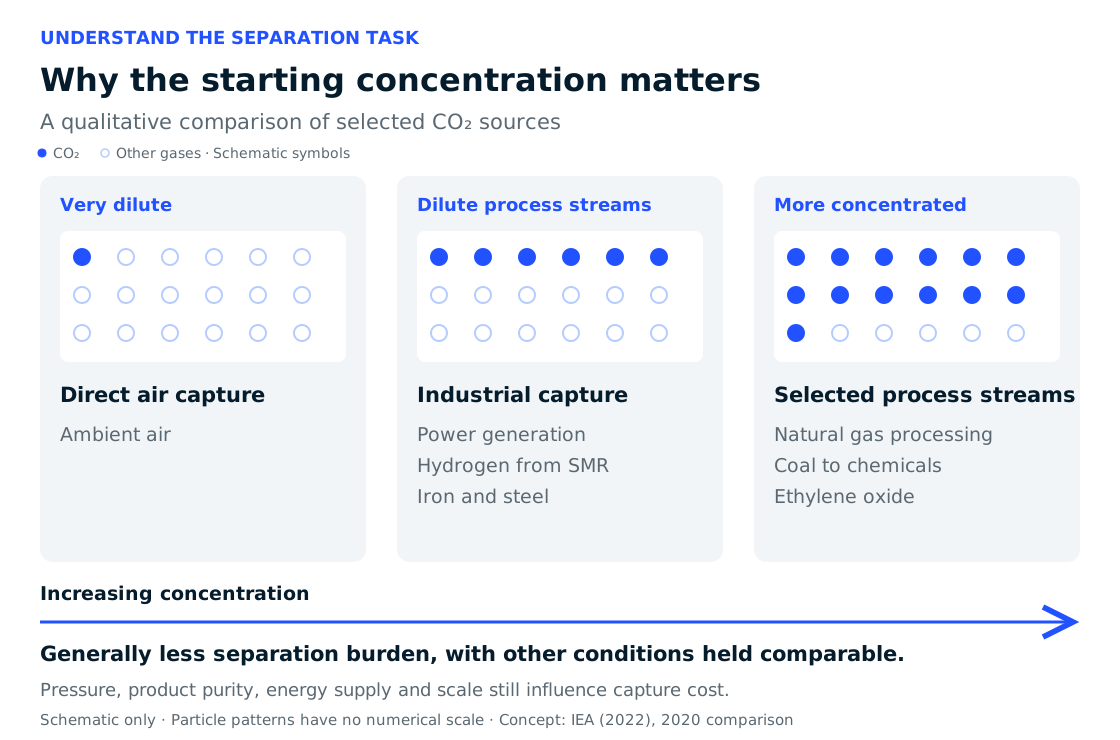
Why the starting concentration matters
 Open figure at full size (opens in a new tab)
Keep each of the ten questions visible
The ten themes address different assumptions: the meaning of net zero; the role of offsets; differences in responsibility; contributions from smaller emitters; the role of CCS; local context; wider environmental effects; participation beyond institutions; economic development; and sources beyond energy. An organization may already understand some of these while needing more information about others. The aim is to give the plan a clearer foundation, not to assume that a question reveals ignorance or bad intentions.
A practical review can take each theme and record the current view, supporting evidence and unresolved decision. For example, a technical option may affect water use as well as carbon, while a financing decision may influence whether another organization can participate. Keeping the questions distinct makes those connections easier to discuss. It also ensures that an appealing technology or target does not silently become the answer to every part of the transition.
Ten assumptions to examine
| Question | What to consider |
|---|---|
| 1. Does net zero mean no emissions? | Residual emissions and verified removals need a defined balance; reductions remain the priority. |
| 2. Are offsets automatically effective? | Examine additionality, permanence, accounting and community effects; avoided emissions and removals are different. |
| 3. Are responsibilities identical? | Consider historical contribution, current emissions, resources and development needs. |
| 4. Do only major emitters matter? | Smaller organizations and communities can contribute through relevant local actions and demand. |
| 5. Can CCS address every source? | Capture, transport and storage may suit some concentrated industrial sources; costs, energy and storage suitability remain important. |
| 6. Is there one universal pathway? | Emissions sources, infrastructure, economics, culture and available technologies differ. |
| 7. Is every net-zero measure environmentally beneficial? | Check water, land, biodiversity, materials, waste and local pollution alongside carbon. |
| 8. Is action limited to government and companies? | Individuals, communities, researchers, civil society and finance also influence the transition. |
| 9. Are growth and emissions reductions incompatible? | Efficiency, innovation and circularity can create opportunities; assess investment and distributional trade-offs. |
| 10. Is energy the complete picture? | Include industrial process, agricultural, land-use and waste emissions within the relevant boundary. |
Match responsibility with practical capacity
Participation can be broad while responsibilities differ. Historical emissions, current impact, available finance and development needs influence what a transition can reasonably ask of a country, organization or community. Support may include funding, technology access and skills development.
Government provides policy and infrastructure; companies address products, operations and supply chains. Consumers, communities, researchers, civil society and financial institutions influence demand, knowledge, accountability and capital. Smaller contributors can also make relevant changes within their scope.
Discuss fairness alongside practical capacity
Responsibility can be considered in relation to historical contribution, current emissions, development needs and available resources. These considerations help explain why identical actions or schedules may not be appropriate everywhere. They do not remove the value of participation by smaller organizations or communities. The practical discussion is how different actors can contribute meaningfully, including support that improves access to finance, technology or relevant knowledge.
Governments, businesses, financial institutions, researchers, communities and individuals have different roles. Policy can influence infrastructure, business decisions can influence supply and demand, and local knowledge can improve the fit of an initiative. Coordination matters because one group's ability to act may depend on another group's choices. Describing these relationships in plain language can make responsibility more actionable without promising that every stakeholder will have the same resources or influence.
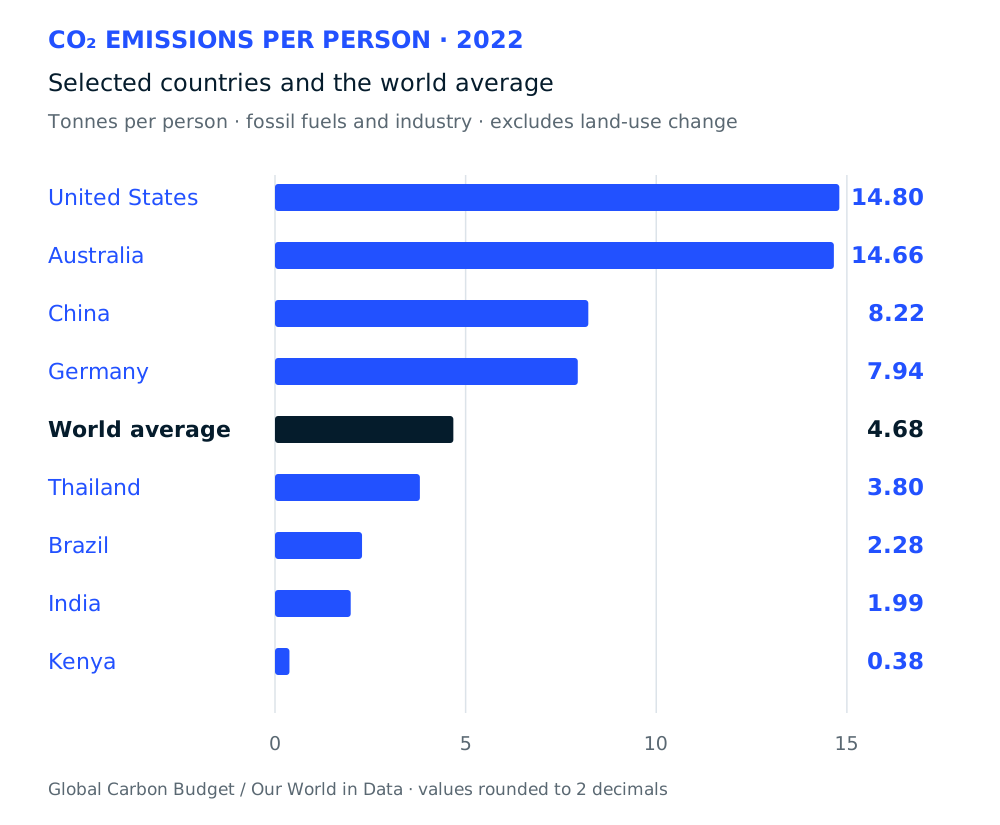
Different countries, different per-person footprints
 Open figure at full size (opens in a new tab)
Read figure data
| Country / aggregate | 2022 tonnes CO₂ per person |
|---|---|
| United States | 14.802 |
| Australia | 14.659 |
| China | 8.218 |
| Germany | 7.942 |
| World | 4.678 |
| Thailand | 3.800 |
| Brazil | 2.283 |
| India | 1.986 |
| Kenya | 0.379 |
Evaluate progress beyond a carbon headline
A lower emissions figure does not by itself establish a good overall environmental outcome. Water use, biodiversity, land rights, resource extraction, waste and local air quality deserve consideration. Community input and continuing monitoring can reveal trade-offs that an early assessment missed.
Innovation, efficiency and circular use of materials can support economic activity while reducing emissions, but benefits are conditional. Review investment needs, affordability, jobs and distributional effects alongside the technical pathway; revise assumptions as evidence improves.
Examine development and environmental trade-offs together
Reducing emissions and supporting economic activity need not be treated as automatically incompatible. Resource efficiency, new services and investment can create opportunities, but outcomes depend on the particular transition and who is affected. A reasoned plan can examine affordability, skills and the availability of alternatives alongside its emissions objectives. It can also identify which assumptions about technology or demand need testing before an opportunity is presented as a reliable outcome.
Carbon is one environmental dimension. Land, biodiversity, water, soil, air quality and materials can also change when an option is introduced. Agriculture, industrial chemistry, waste and land-use emissions require attention alongside energy. Community input and continuing monitoring can help identify effects that an initial plan missed. Revisiting the plan as evidence develops supports a more complete transition discussion without suggesting that every initiative carrying a net-zero label is beneficial in every respect.