
Energy Return on Investment (EROI), Issue of Sustainability
Energy Return on Investment compares the energy delivered with the energy needed to obtain it. Its value lies in a clear boundary and a careful interpretation of the surplus available for other uses.

The short version
- Compare like-for-like energy boundaries before comparing EROI values.
- A lower ratio can leave less energy available beyond the energy system itself.
- Assess reliability, emissions, affordability and energy quality alongside the ratio.
The ratio asks an energy question
Energy Return on Investment, or EROI, is energy returned divided by energy invested in obtaining it. The result is an energy ratio, not a financial return. A project with attractive revenue can still have a demanding energy supply chain, and a high energy ratio does not by itself establish a profitable project.
The useful idea is surplus: part of the energy produced supports the energy system, while the remainder can serve industry, services and households. That makes the measurement relevant to energy planning beyond the generating or extraction site.
Keep an energy ratio separate from a financial return
EROI compares energy delivered with energy used to obtain it. It is not a profit margin, a return on capital or a direct forecast of an energy price. An option can face a difficult energy balance while receiving revenue or support that affects its financial result. Conversely, a favorable energy ratio does not settle its investment cost, environmental impact or ability to meet a customer's supply requirements. Naming the question prevents one useful measure from being asked to answer every question.
A discussion can begin by describing the output being counted and the inputs included. Is the result measured at an extraction site, after processing, or at the point of use? Does it include equipment manufacture and maintenance? The purpose is not to make every boundary identical for every study, but to make the boundary understandable. A ratio becomes more useful when readers can see what it represents and which decisions it can reasonably inform.
An energy ratio
- Boundary
- Define which upstream, conversion and supporting inputs are included.
Why a falling ratio can matter
If more energy is required to obtain the same amount of useful energy, less remains available for other activities within that boundary. At relatively low ratios, further reductions can have a stronger effect on the available surplus. This is often described as a net-energy cliff.
Historical energy development illustrates the connection between accessible resources and wider economic activity. That context does not establish one current EROI ranking for all technologies. Resource quality, location, equipment and operating conditions can change the result.
Explain the net-energy concern in practical terms
Energy used by an energy-producing system is energy that is unavailable for another purpose within the chosen boundary. If obtaining an output requires a larger share of that output, the remaining surplus becomes smaller. This is the idea behind the net-energy concern discussed in the article. Its significance depends on the system being assessed, the energy service delivered and the alternatives available; it does not establish a single universal threshold for every economy or technology.
An illustrative comparison might examine a source that needs more processing as its accessible resources change. The review would ask how the additional demand affects delivered energy and which stages account for it. It would not infer a precise change in living standards or economic growth from the ratio alone. The discussion is more helpful when it connects the energy result with practical requirements such as supply continuity, infrastructure, environmental effects and the resources needed for the transition.
Why the net-energy curve steepens
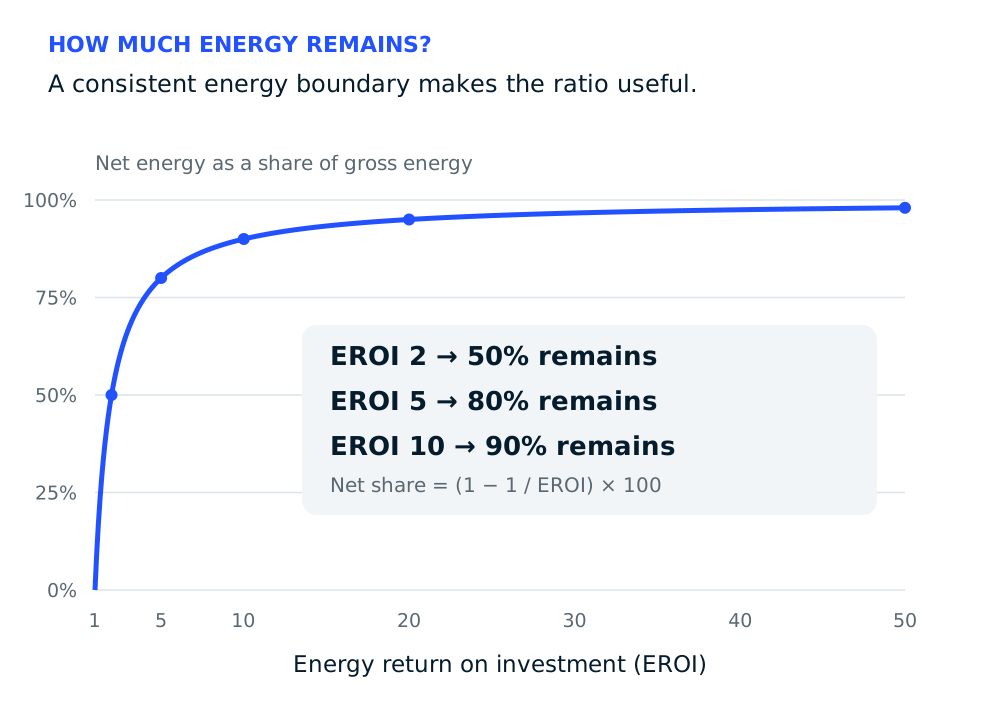 Open figure at full size (opens in a new tab)
Read figure data
| EROI | Net energy as % of gross |
|---|---|
| 1 | 0.0% |
| 2 | 50.0% |
| 5 | 80.0% |
| 10 | 90.0% |
| 20 | 95.0% |
| 50 | 98.0% |
Make the boundary visible
One study may measure energy at extraction, while another includes processing, transport, equipment manufacture, maintenance or end-of-life work. Treatment of materials and other indirect inputs can also differ. Two ratios with different boundaries need reconciliation before comparison.
The form and timing of energy matter as well. Fuel, heat and electricity provide different services. Variable electricity supply may require storage or other system support; these requirements need a consistent method rather than an assumed penalty or benefit. Downstream conversion also changes how much useful energy reaches the final user.
Compare the energy service on a consistent basis
Stored fuels and generated electricity provide different starting forms of energy. A comparison can therefore change when it follows them through conversion, delivery and final use. The energy required to refine and transport a fuel is part of a different boundary from the energy required to manufacture a generating installation. Additional arrangements for storage or supply management may also matter. A consistent description makes these differences visible rather than hiding them inside a single ratio.
Before placing two published values beside one another, check the output form, operating life, processing stages and treatment of indirect inputs. Also check whether the values come from comparable settings and assumptions. These questions can explain why two studies disagree without assuming that either is necessarily wrong. They help identify what information is still needed for the comparison and whether a value is suitable for the particular planning question under discussion.
Before comparing two EROI values
| Comparison dimension | What to make explicit |
|---|---|
| Delivery point | At extraction, after processing, at the grid, or at the final user? |
| Inputs | Operations only, or also equipment, materials, maintenance and end-of-life work? |
| Energy service | What form, quality and useful conversion does the delivered energy provide? |
| System support | How are storage, transport, reliability and other supporting requirements treated? |
Use EROI alongside a wider system assessment
A demanding energy supply chain can affect resources available elsewhere, operating costs and vulnerability to disruption. Affordability and access may differ across communities. Environmental burdens associated with obtaining energy also deserve assessment, rather than being represented by the ratio alone.
Combine EROI with the intended energy service, supply reliability, lifecycle emissions, financial cost and resource constraints. This creates a more useful decision than selecting a technology by a single number whose inputs are unclear.
Connect the metric with a wider resilience discussion
A lower surplus can create questions about the resources committed to energy supply, while environmental damage or supply disruption can create concerns that a ratio does not directly capture. An assessment can place these issues alongside affordability, access and the reliability of the required service. The relationships are contextual. Differences in infrastructure, resources and ability to respond mean that the same technical result may have different practical implications for different communities or organizations.
For a planning conversation, it can be useful to identify the part of the system most exposed to change and the evidence available to examine it. That may be resource quality, processing demand, imports or a supporting technology. EROI contributes an energy perspective to that conversation. It remains one part of a broader comparison, helping explain where energy goes without implying that energy quality, financial viability, environmental responsibility and security can all be reduced to one number.