
A Practical Guide to Create a Reasonable Marketing Plan for Chemical Technologies
A useful marketing plan connects technical potential with a customer need, a reachable market and a clear reason to choose your offer.

The short version
- Start with the customer's problem and buying context.
- Compare segments and alternatives using the same criteria.
- Review your assumptions as markets and customer needs change.
Find the customer problem behind the technology
A chemical technology can be technically promising while its market remains unclear. The challenge begins with that gap: developers understand what their invention can do, but potential customers may judge its value through different needs and priorities. A market case begins by making those priorities visible. Technology-led development starts with what becomes possible; customer-led development starts with an identified need. Exploring both perspectives can help test whether the proposed offer has a practical place in the market.
Customer conversations help connect an interesting technical feature with a problem someone wants to solve. Ask what the customer is trying to achieve, what makes the current approach difficult and which requirements matter most. Listen for the buying context as well as the technical specification. These conversations can also reveal assumptions that the development team has carried into the discussion. A conversational interview with relevant technical and market contacts can make different priorities easier to understand. Building rapport, checking unfamiliar requirements and recording the discussion promptly help preserve what was learned.
Translate a technical feature into a customer question
Technology development and customer needs can inform each other. A new technical capability may reveal an opportunity, while a customer problem can help determine which capability is worth developing. The useful conversation is what a prospective customer is trying to accomplish, what currently makes that difficult and how a proposed solution would change its situation. This avoids assuming that technical sophistication alone establishes a willingness to buy.
Interviews can begin with people who understand the application and development context. A conversational approach, suitable introductions and prompt notes help preserve what was learned. The team can ask about an important requirement without assuming that its own terminology or sustainability priorities match the customer's. Purchasing, price and supply questions also matter, but their meaning becomes clearer when the customer's use, evaluation process and decision responsibilities are understood.
Choose the segment you can understand and reach
A broad market description can hide very different customer needs. Segmentation groups customers with shared characteristics so that an offer can be considered in a more specific context. Assess whether a segment is measurable, substantial, accessible, distinguishable and actionable.
These questions turn a general opportunity into a clearer choice. Can the potential customers be identified? Is the segment attractive enough to study further? Can the business reach and serve it? What would need to change in the offer for this group? The answers should come from evidence that can be reviewed, rather than enthusiasm for the technology alone.
Compare the alternatives customers already have
The relevant comparison includes both direct competitors and other ways to meet the same need. A customer may value an existing approach for its price, reliability, availability or familiarity. Understanding those alternatives helps explain where a new technology could offer a meaningful difference.
Competitive analysis connects with distinctive competencies: the capabilities or resources that give a business a particular strength. Put the two perspectives together. Which customer requirement does the offer address well, what supports that advantage, and where does the competing approach remain stronger? A clear comparison makes the market proposition easier to discuss.
Compare the offer customers can choose
| Criterion | Company A | Company B | Company C |
|---|---|---|---|
| Annual production (KTA) | 1,500 | 1,000 | 2,000 |
| Feedstock | Naphtha | Ethane | Mixed feed |
| Price ($ per ton of ethylene) | $600 | $550 | $620 |
| Energy efficiency | High | Moderate | Very high |
| Expansion assumption | 500,000 tons added by 2025 | 300,000 tons added by 2024 | New plant in Southeast Asia by 2026 |
| Technology | Traditional steam cracking | Advanced steam cracking | High-selective cracking |
| Geographic presence | North America and Europe | Middle East | Asia-Pacific |
| Supply resilience | Strong; multiple sourcing options | Vulnerable; dependent on ethane supply | Strong; diverse feedstock |
| Customer segments | Plastics, automotive and construction | Agriculture and packaging | Textile, rubber and paints |
| Brand positioning | Market leader; trusted quality | Cost leader; rapid growth | Innovative technology; customer focus |
Turn the comparison into questions for Company A
- 01Strengths
Broad geographic presence, multiple supply options and an established market position. Which strengths matter most to the chosen customer segment?
- 02Weaknesses
Assumed production cost above Company B; reliance on naphtha can be costly in some regions. What evidence supports that cost comparison?
- 03Opportunities
Advanced cracking technologies and emerging Asian markets. Which investment or market opportunity fits the company’s capabilities?
- 04Threats
Company B’s growth and cost position, Company C’s technology adoption and a shift toward more sustainable feedstocks. Which changes could weaken the current offer?
Keep eight connected market themes in view
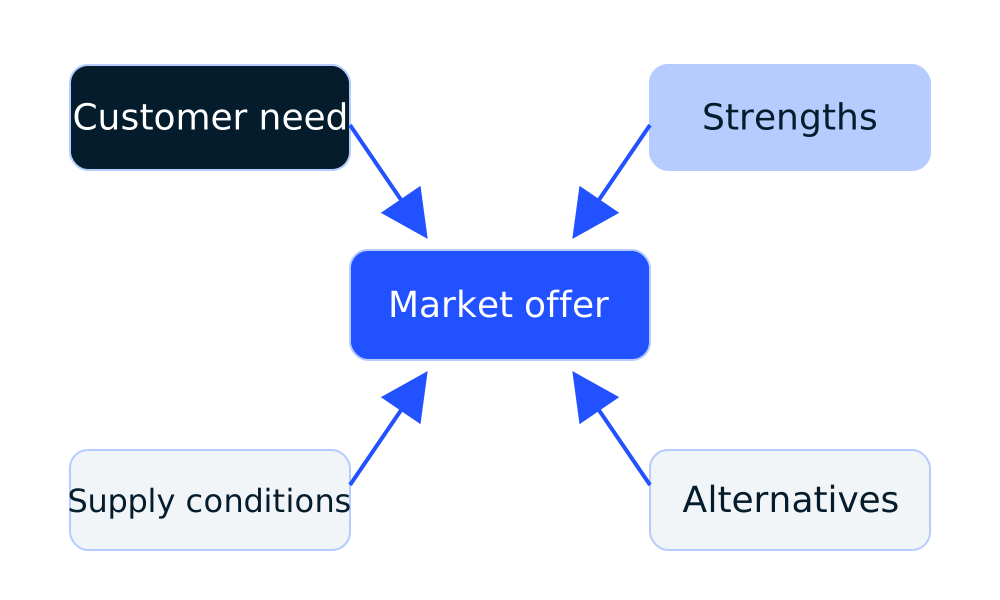
The eight themes are customer needs, customer analysis, segment evaluation, competitors and products, driving forces and lifecycle effects, industry context, distinctive capabilities and the supply industry. They connect the proposed value with the conditions needed to deliver it. A segment can look attractive yet be difficult to reach; a technical advantage can depend on an unavailable feedstock; and an environmental benefit can occur at a different lifecycle stage from the customer's own operations.
A practical market view can distinguish observed customer information from assumptions. It can describe the alternatives customers already use, the aspects they value and the capabilities the supplier can substantiate. Competitors include different ways of meeting the same need, not only similar technologies. Keeping these distinctions visible helps a team choose a focused initial proposition and identify the questions requiring further conversations rather than treating a broad industry estimate as assured demand.
Connect the market case
 Open figure at full size (opens in a new tab)
Consider the wider impacts and supply needs
Life cycle assessment adds another perspective: environmental impacts from raw materials and production through transport, use and end of life. A consistent boundary can help compare alternatives and identify stages where emissions, resource use or waste merit closer attention. It supports the environmental part of the market case alongside customer and commercial evidence.
Industry research can combine desk research, interviews and market surveys. It also considers the suppliers needed to support the offer: raw materials and intermediates, equipment, testing, logistics and technical or safety services. Availability and reliable relationships may affect whether the proposed route can be served in practice.
Treat the market case as a working view
Customer needs sit within an industry that changes. Technological developments, regulation, economic conditions, supply relationships and environmental considerations are part of the wider picture. These influences can change both the opportunity and the conditions required to serve it.
Bring the findings into a working market case with its assumptions visible. Record what is known, what still needs a customer conversation and which outside developments could change the conclusion. Regular review helps keep the business direction connected to the evidence gathered during technology development.
Turn the market view into a revisable plan
Changes in technology, policy, economic conditions, customer preferences and competitors can alter a market case. Lifecycle assessment adds another perspective by following impacts through materials, production, use and disposal or recovery. Supply arrangements then connect the proposition with raw materials, equipment, testing, logistics, safety support and technical services. Their availability and requirements can affect whether a promising offer is practical at the proposed scale.
The plan can record the selected segment, the reason for the offer, the evidence supporting it and the next customer or supply question to resolve. It can also explain what new information would change the decision. This keeps market work connected to technology development without demanding a prediction of every future condition. A question-based framework supports that continuing discussion while preserving the full set of market themes and recognizing that advantages and customer needs can change.