
H2 or kWh – Evaluating the Potential of Hydrogen and Electron Economies in Decarbonization
The choice depends on the energy task, the supply infrastructure and the losses across the full pathway from production to use.
The short version
- Hydrogen carries energy and requires production, storage and transport.
- Direct electricity can avoid additional energy conversion steps.
- Compare both pathways against the sector's operating requirements.
Start with the energy task
Hydrogen and electricity are often discussed as competing routes to decarbonization. The more useful starting point is the task the energy must perform. Is the need for power, process heat, transport or energy stored for later use? How much flexibility is available in when and where the energy is delivered?
The choice depends on the sector, its requirements and its geography. Direct electricity may suit one application while hydrogen merits closer examination in another. The question becomes more concrete when the operating conditions are visible: required temperature, duration, access to supply and the practical limitations of the equipment or location.
Trace the pathway from production to useful energy
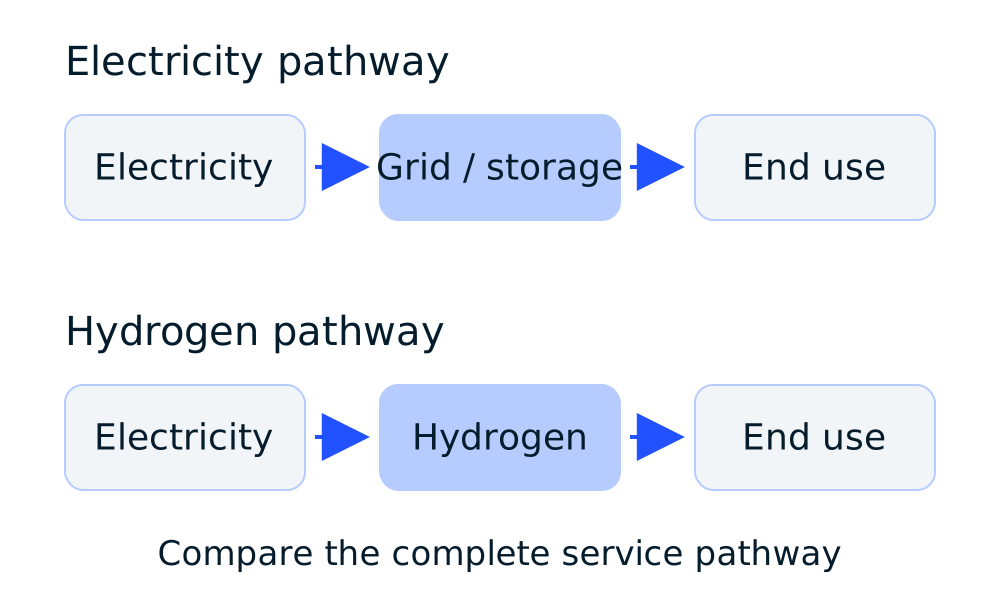
Hydrogen is an energy carrier. Energy is needed to produce it, and further steps may be needed to condition, store and transport it. If hydrogen is later converted into electricity, that conversion adds another stage between the original energy supply and the useful output. Each stage has requirements and potential losses.
Using electricity directly can avoid some of those additional conversions. That advantage should be considered across the whole task rather than one piece of equipment. An electric route also needs a suitable supply and distribution system. Renewable generation, storage and grid management matter because electricity must be available when the application needs it. Comparing complete pathways makes their differences easier to see.
Compare complete energy-service pathways
 Open figure at full size (opens in a new tab)
Examine how the energy is produced and delivered
The carbon implications of hydrogen depend on its production route. Production from natural gas and production from water through electrolysis involve different supply conditions, including the role of carbon capture or renewable electricity. The presence of hydrogen at the point of use does not by itself describe the energy and emissions involved in producing it.
Electricity also has a production and supply context. Consider the power source, the timing of demand and the infrastructure needed to deliver it. For hydrogen, consider storage conditions, transport arrangements and handling requirements as well as production. These questions connect the decarbonization discussion with the physical system that would make the chosen pathway work. They also keep the comparison focused on the full chain rather than an isolated end-use benefit.
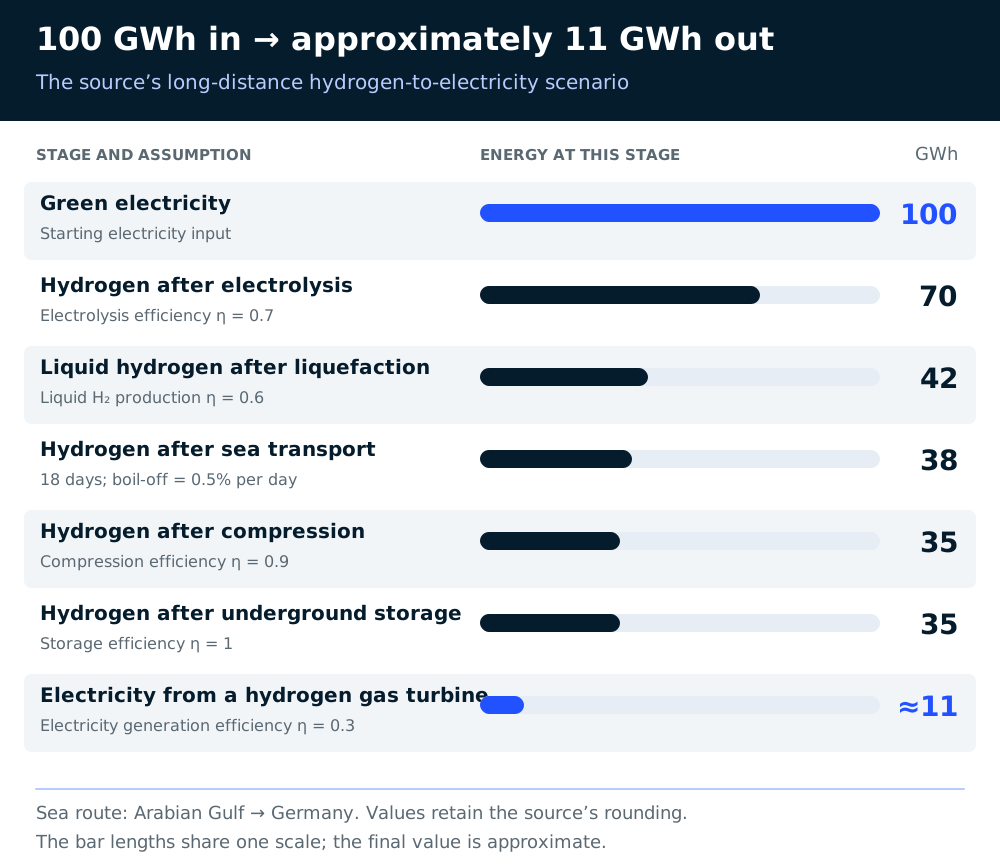
Where the energy goes in one hydrogen scenario
 Open figure at full size (opens in a new tab)
Read figure data
| Stage | Energy remaining | Source assumption |
|---|---|---|
| Green electricity | 100 GWh | Starting electricity input |
| Hydrogen after electrolysis | 70 GWh | η = 0.7 |
| Liquid hydrogen after liquefaction | 42 GWh | η = 0.6 |
| Hydrogen after sea transport | 38 GWh | Arabian Gulf–Germany; 18 days; boil-off 0.5% per day |
| Hydrogen after compression | 35 GWh | η = 0.9 |
| Hydrogen after underground storage | 35 GWh | η = 1 |
| Electricity from a hydrogen gas turbine | Approximately 11 GWh | η = 0.3 |
Separate the energy carrier from the energy service
An energy carrier is something that delivers energy to a user. The service is what the user needs that energy to accomplish: moving a vehicle, supplying process heat, supporting a chemical reaction or maintaining electricity during an interruption. Describing the service first makes the comparison clearer. It prevents a discussion about the appeal of a particular fuel from replacing the practical question about what the proposed system needs to do.
Consider an industrial heating requirement as an illustrative starting point. The useful comparison would describe the required temperature, operating schedule, continuity and existing equipment before examining either route. An electric option and a hydrogen option might require different supporting arrangements. Listing those arrangements makes the engineering and financial questions visible without assuming that one carrier will be preferable for every heating task.
Match the pathway to the practical constraints
Some applications make direct electrification more difficult because of their operating requirements or location. High energy demand, transport range, stored energy and access to a grid deserve examination. These are reasons to examine an application carefully; they do not establish that every activity in a sector requires the same solution.
Hydrogen brings its own constraints. Storage and transport can require substantial equipment and energy, while production and supply infrastructure need to be considered alongside safety. An electric option may instead be constrained by grid capacity, supply variability or storage requirements. Set these considerations against the same required service. A pathway that looks attractive in one setting can face different limitations in another.
Read energy security and environmental claims together
An option can reduce one dependency while introducing another. Electricity supply depends on generation, network access and timing; a hydrogen route also depends on the equipment and resources used to make, condition and deliver the hydrogen. A description such as domestic, renewable or low carbon is therefore a starting point for investigation. The proposed source, the route to the user and the conditions for dependable supply still need to be explained.
The environmental comparison should follow the same boundary as the energy comparison. Ask how production and delivery are supplied, which conversion steps are required and what remains outside the study. A favorable characteristic at one stage does not establish the result for the complete pathway. A clearly stated boundary helps readers understand both the possible benefit and the supporting evidence needed before it is used in a decision.
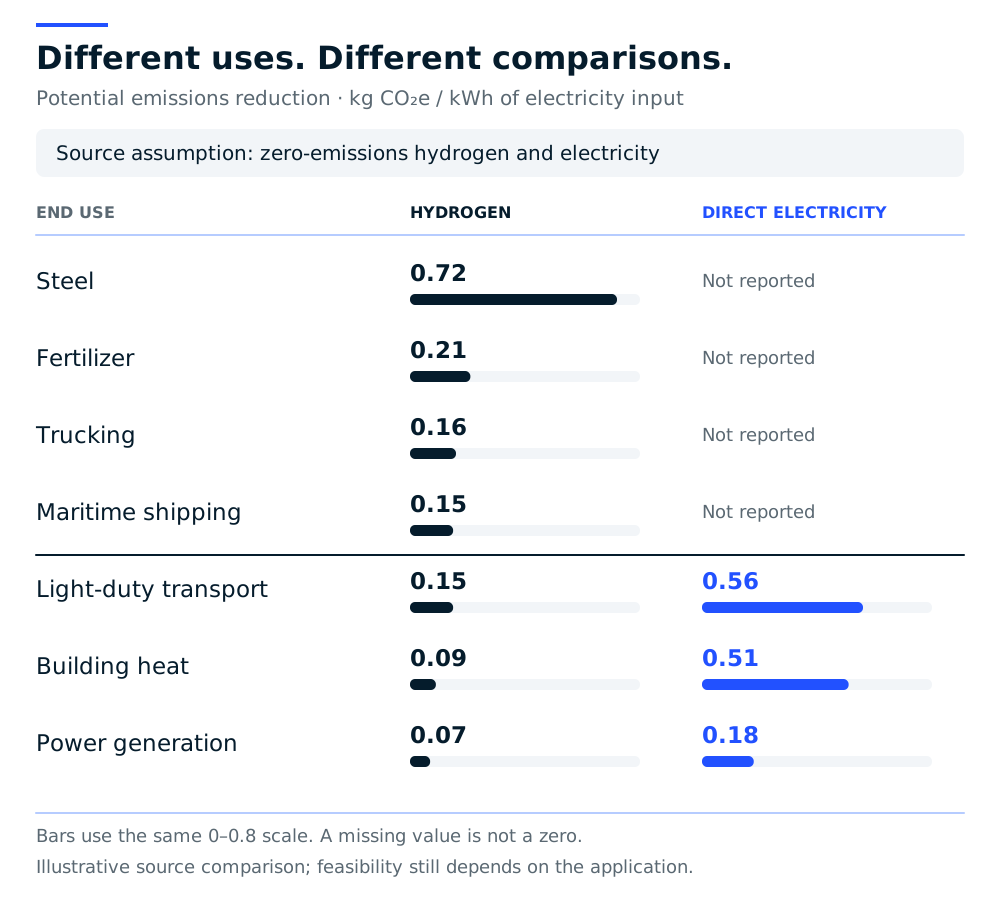
Compare end uses within the same stated assumptions
 Open figure at full size (opens in a new tab)
Read figure data
| End use | Hydrogen (kg CO₂e/kWh input) | Direct electricity (kg CO₂e/kWh input) |
|---|---|---|
| Steel | 0.72 | Not reported in source |
| Fertilizer | 0.21 | Not reported in source |
| Trucking | 0.16 | Not reported in source |
| Maritime shipping | 0.15 | Not reported in source |
| Light-duty transport | 0.15 | 0.56 |
| Building heat | 0.09 | 0.51 |
| Power generation | 0.07 | 0.18 |
Build a comparison that leaves room for both routes
A useful comparison makes its boundaries visible. Identify which production, conversion, storage, delivery and end-use steps are included. Consider efficiency, access, reliability, safety and cost within that boundary, then note where the evidence is incomplete. A headline conclusion is easier to assess when readers can see the assumptions supporting it.
The two routes can also be considered together. Electricity is part of the electrolysis pathway, and different energy tasks may call for different choices within the same wider system. Start with the applications that can use direct electricity, then examine the specific reasons for considering hydrogen elsewhere. The aim is a coherent set of decisions grounded in the use cases and supply conditions, with uncertainties available for further study.
For an initial discussion, bring together the energy demand, available supply information and the constraints already known. What power source would support each route? Which conversion or storage stages would it require? What infrastructure is available, and what would need further examination? Where does the application need flexibility or continuity of supply? Answering these questions creates a clearer starting point for comparing the options and deciding which missing information could most change the view.