
The Importance of Risk Assessment in Safety Engineering
An anonymous petrochemical expansion example explores how a structured review can connect process hazards, failure scenarios and proposed safeguards.
The short version
- A process change can introduce hazards that merit a fresh review.
- Drawings and equipment information help frame failure scenarios.
- New design or operating information may change earlier findings.
Begin with the conditions that are changing
This anonymous petrochemical expansion example considers hazardous chemicals, pressure and temperature through a structured risk review. A process or design change can introduce conditions that deserve a fresh assessment. For a study or design review, the useful starting point is to understand the proposed change and the basis on which the process is expected to operate.
Process information, equipment descriptions and incident history help establish that basis. Which conditions are new? Which assumptions are being carried forward? Where is information incomplete? These questions frame the scenarios to examine and the documents that could support the review.
Describe the scenario before discussing a safeguard
A hazard identifies a potential source of harm; a scenario explains how a set of circumstances could lead to an unwanted outcome. The distinction helps a team move from a broad concern, such as pressure or a hazardous chemical, to a discussion it can document. The review can connect an initiating condition with the process response, possible exposure and the information that supports that view. Where evidence is incomplete, the uncertainty can remain visible instead of being converted into a confident conclusion.
For an illustrative blocked-flow discussion, the useful questions concern the actual flow path, operating mode, equipment limits and existing protective arrangements. The example is a way to frame a study, not a design instruction or an assertion about another facility. It also shows why a recent process description matters. A scenario developed around an earlier configuration may need reconsideration when the equipment, controls or intended operation have changed.
Connect hazards, safeguards and follow-up
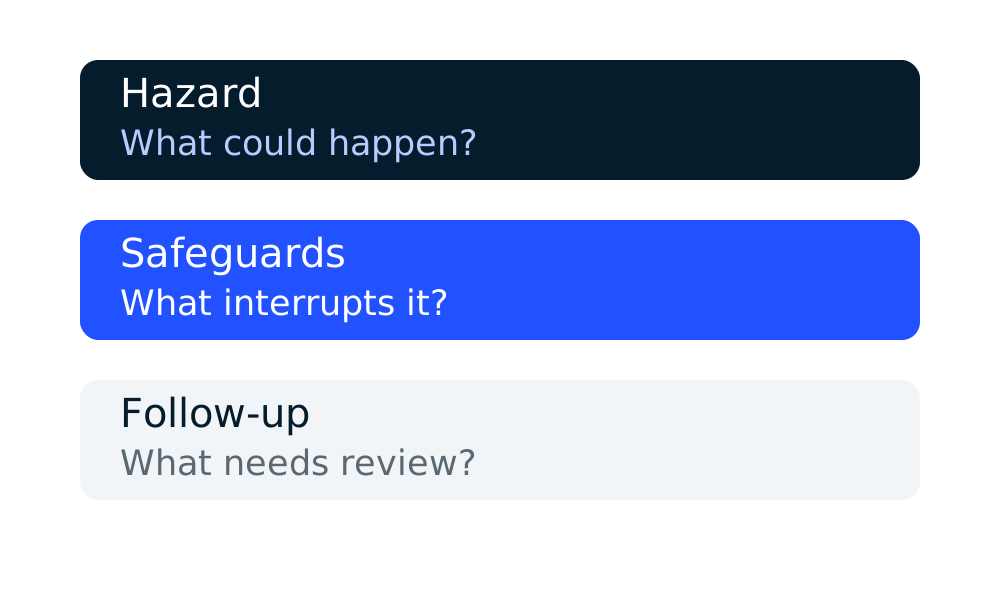 Open figure at full size (opens in a new tab)
Use structured questions to examine the scenarios
Three relevant approaches are hazard identification, or HAZID; a hazard and operability study, or HAZOP; and failure mode and effects analysis, or FMEA. They consider hazards, process deviations and equipment failures from different perspectives.
Process flow diagrams and piping and instrumentation diagrams support examination of scenarios such as blocked flow, equipment malfunction and pressure problems. Equipment information helps frame questions about possible failure modes. These examples show how a review can connect the process description with specific questions; the appropriate review scope still depends on the system and the information available.
Use complementary methods for a defined purpose
HAZID, HAZOP and FMEA offer different ways to organize questions. A broader hazard discussion may help identify the areas needing attention; a deviation-based process review examines departures from intended conditions; an equipment-focused review considers how particular failures affect a system. The methods can inform one another when their purposes and boundaries are clear. Using several names alone does not demonstrate that every relevant hazard has been examined.
The review team can explain why each approach is suitable for the available information and the decision being supported. It can also identify the knowledge needed from operations, engineering, maintenance and other relevant specialists. A structured worksheet is helpful when it preserves the reasoning, assumptions and unresolved points. Its usefulness depends on the quality of that discussion and the system description, rather than on the amount of documentation produced or a promise of certainty.
Different lenses for the review
| Review lens | Question it brings | Useful information |
|---|---|---|
| HAZID | Which hazards deserve further examination? | Process description and proposed changes |
| HAZOP | What could happen when conditions deviate from the intended basis? | Process conditions, PFDs and P&IDs |
| FMEA | How might an equipment failure affect the system? | Equipment descriptions and failure modes |
Connect each concern with the proposed response
Identifying a scenario is one part of the discussion. Safeguards, operating procedures and training need to be related to the hazards identified. A documented review can make those connections visible by recording the concern, the response being proposed and any assumptions that need further examination.
In this case narrative, the proposed responses cover pressure relief and emergency shutdown, sealing materials and inspection for leaks, and accommodation of thermal expansion. These are topics for checking the design basis and relevant engineering documents. Their suitability depends on the specific hazards, equipment and operating conditions.
Procedures and operator preparation are part of the same discussion, including startup, shutdown and emergency response. A useful review records the concern, the proposed response, its assumptions and any open actions, so the responsible team can decide what needs further examination.
Keep the review connected to new information
Risk assessment continues as operating experience and inspection information become available. That principle also applies to a design study: an assessment rests on a particular description of the system, so changes to that description may affect its findings.
The narrative later describes a pressure excursion during startup and corrosion identified during inspection. These observations illustrate why protective-system response, operator preparation and follow-up inspection deserve attention. The account provides a qualitative learning example; it does not establish a measured improvement in risk or independently verified incident prevention.
Keeping the documented basis and unresolved questions available supports later review. When a process condition, equipment assumption or operating procedure changes, the earlier scenarios and proposed responses may need another look. This helps maintain a clear connection between the information used, the recommendations made and the next questions to examine.
Connect the study with a responsible decision
A documented assessment can distinguish existing safeguards, recommendations for further consideration and information still needed. That separation helps readers understand what the study has examined and what remains to be decided. If a proposed response depends on an operating assumption or a particular equipment condition, the record can say so. Responsibility for reviewing suitability and accepting a solution stays with the appropriately authorized team, supported by the relevant engineering work.
The anonymous expansion narrative includes later operating and inspection observations. Those observations illustrate why assumptions may need revisiting, without establishing that a particular safeguard prevented a measured catastrophe. A practical study handover can therefore explain the review boundary, the scenarios considered, the documents used and the open questions. This gives subsequent reviewers a basis to work from and keeps safety discussion connected with productivity decisions through evidence rather than an implied guarantee.