
How to maximize utilization of catalyst in commercial-scale fixed-bed reactor.
A catalyst’s intrinsic activity is only part of reactor performance. Transport from the bulk fluid to its surface can limit how much of that activity becomes useful.
The short version
- Identify the controlling resistance before selecting an improvement.
- Examine fluid distribution, contacting, particle geometry and operating conditions.
- Compare performance changes with pressure drop, residence time and heat effects.
Explain what useful catalyst performance means
A catalyst can have strong activity in a suitable test while a reactor uses that potential differently. The reacting material must reach the active region under conditions that support the intended reaction. Flow, contacting, particle characteristics and temperature influence the relationship between material performance and the result observed in the equipment. Discussing utilization therefore means looking at the catalyst together with the process around it.
The useful outcome also needs a definition. A process may care about conversion, desired product selectivity, stability or the resources required to maintain performance. These aims are related but not interchangeable. Stating the objective helps explain why an apparent improvement in reaction rate is only one part of the engineering comparison. It gives the study a basis for considering the full effect of a proposed change rather than maximizing a single measurement in isolation.
The basis can also state the reactant phase and concentration, the reaction being studied, catalyst activity and severity, and the shape and size of the particles. These factors help define the relationship between contacting and the observed result. They should accompany a comparison when the aim is to understand which influence is limiting performance, so that a change in catalyst behavior is considered within the conditions that produced it.
Follow the path to the reaction
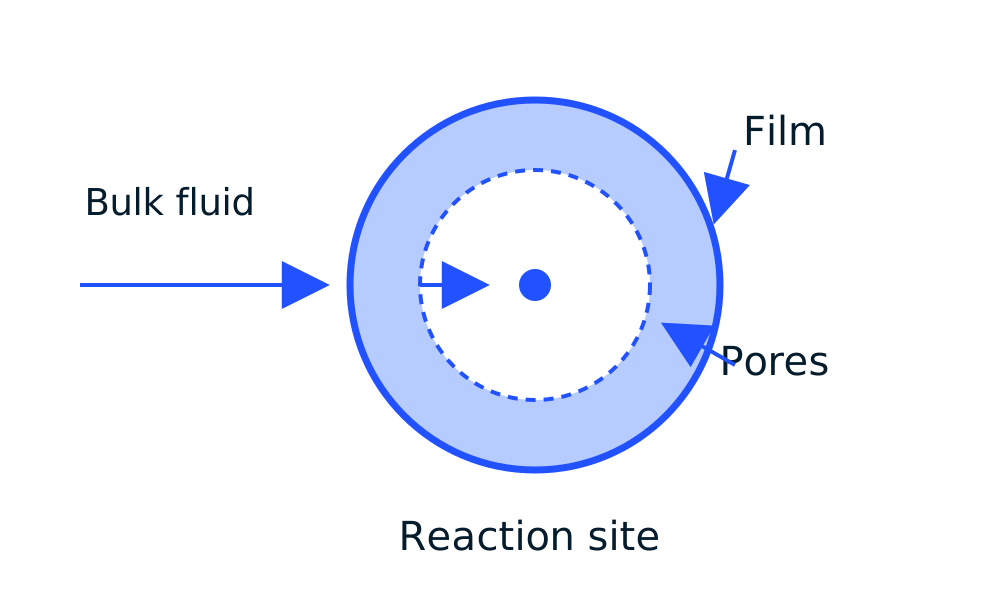
In a heterogeneous catalytic reactor, reactants travel from the bulk fluid to the catalyst surface and, where relevant, into its pores before reacting. The observed rate reflects these connected steps as well as the catalyst’s intrinsic chemistry.
When external film transport is comparatively slow, a more active catalyst may not produce a proportional increase in the measured rate. Reactants can be consumed at the surface faster than they are supplied.
Follow the reactant to the reaction site
 Open figure at full size (opens in a new tab)
Keep the observed rate separate from the proposed explanation
An observed reaction rate combines the influences present during the test. The result alone may not distinguish the contribution of intrinsic chemistry from resistance in the surrounding fluid or within a particle. This is an interpretation question: which conditions were measured, which influences were represented in the analysis and which remain uncertain? Making those distinctions helps explain what the experiment actually supports.
A review can compare observations made under deliberately different study conditions, provided the differences are recorded and interpreted together. For instance, a change in fluid contacting may be examined alongside the same catalyst and feed basis. The result can inform a hypothesis about transfer effects without proving a universal mechanism from one observation. The next test or model comparison should address the unresolved influence that matters most to the intended reactor decision.
Identify the controlling regime
Film resistance is one possible limitation; internal diffusion, chemical kinetics and thermal behavior can also matter. The relevant regime depends on the reaction, phase, concentration, catalyst activity and operating conditions.
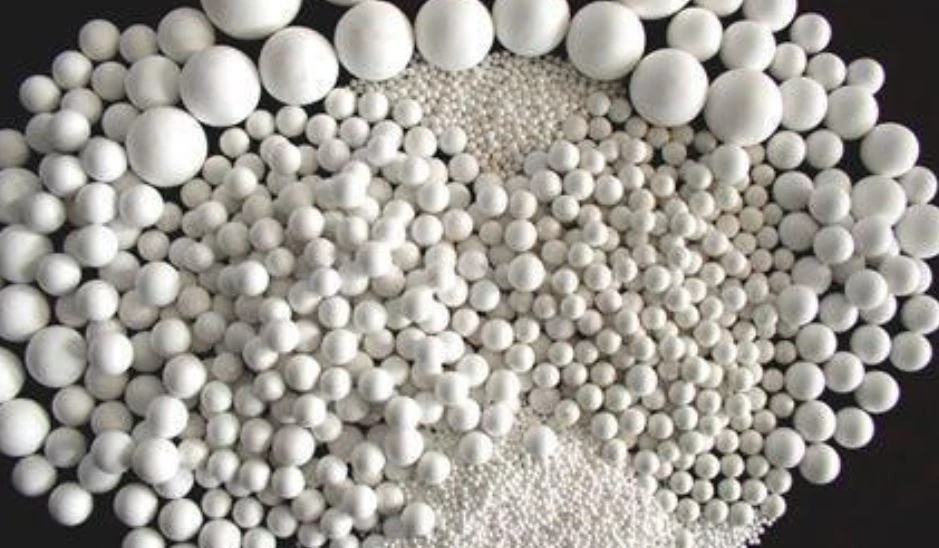
Catalyst shape and size affect geometric surface area and transport. Fluid distribution affects how consistently the bed is contacted; in gas-liquid systems, wetting and liquid distribution can introduce additional considerations.
Examine contacting across the bed
A reported overall flow rate does not describe every local contacting condition in a catalyst bed. The study can ask whether the fluid reaches the catalyst consistently, whether the distribution changes and whether the relevant phase contacts the intended surface. These questions are particularly useful when the objective concerns wetting or distribution. They connect the flow arrangement with the evidence used to interpret catalyst performance.
A comparison can consider the same catalyst in two arrangements with different distribution assumptions. The useful record explains those assumptions, the operating conditions and the observations available. If the comparison indicates a contacting question, the next step is to define the evidence needed for an engineering assessment. Overall flow and local distribution should be considered together when the purpose is to understand how consistently the material contacts the catalyst.
Evaluate a change against its other effects
Higher fluid velocity may improve external transfer, while improved distribution can reduce poorly contacted regions. Particle geometry and a supported flow model may also help. Each option needs a review of residence time, conversion, pressure drop and heat transport.
A particular percentage target cannot be assumed for every reactor. Define the acceptable transport influence around the purpose of the design or experiment, the model and the uncertainty in its data.
Make a proposed improvement a balanced study question
Changes to velocity, particle geometry or bed arrangement can influence more than the transfer effect being investigated. The comparison also needs the pressure-drop, residence-time, conversion and selectivity questions that apply to the process. A beneficial change in one respect may be accompanied by a different constraint elsewhere. This is why the engineering objective and operating basis should remain visible while options are considered.
A concise study record can list the proposed change, its intended purpose, the other effects to examine and the evidence needed for a conclusion. It can also state what is outside the current comparison. This produces a clear next question for calculations, experiments or document review. The resulting recommendation remains connected to the system and its requirements, without converting a general mass-transfer principle into a universal reactor-design rule.
Use the evidence to choose the next question
Compare observations with an appropriate model to ask whether external transport is materially influencing the rate. If a change in contacting changes apparent performance, that can guide further investigation; it is not by itself a complete diagnosis.
The aim is to understand which resistance deserves attention before replacing a catalyst or extrapolating laboratory performance to a commercial configuration.