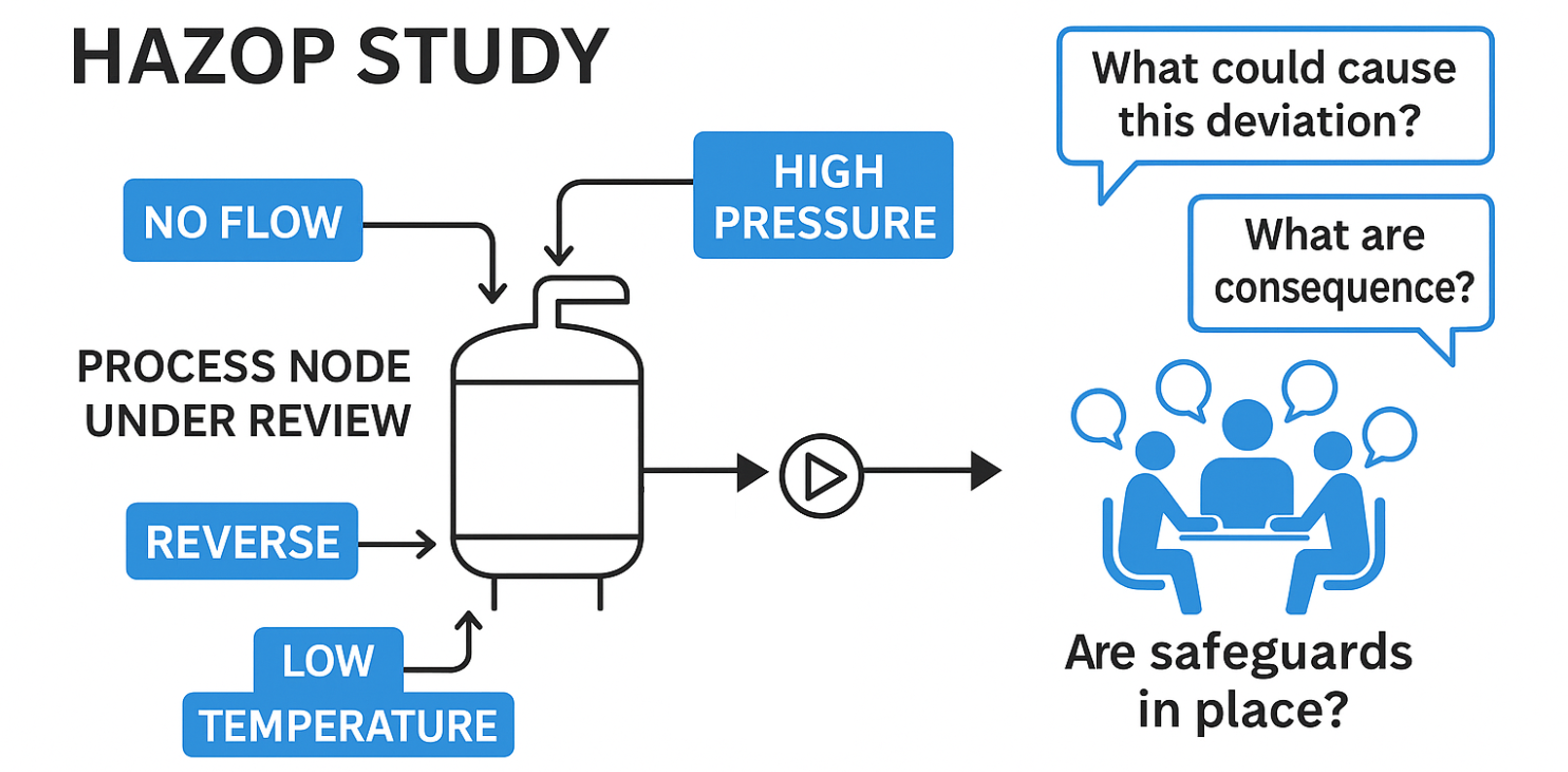
A Hazard and Operability (HAZOP) study isa structured and systematic examination of an industrial process to identify what could go wrong. Originally developed by ICI in the 1960s, HAZOP has become standard practice in chemical, oil & gas, and other high-risk industries. In a HAZOP, a multi-disciplinary team methodically reviews a process design (or anoperating facility) using predetermined “guide words” (like No, More, Less, Reverse) to discussion of deviations from intended operating conditions. The goal isto uncover possible hazard scenarios (e.g. a valve failing closed leading tooverpressure) or operability problems (e.g. a control valve failure causingproduction loss) that might not be obvious. According to industry guides,HAZOP is a qualitative technique carried out by an experienced team in a series of meetingsntnu.edu. Theteam considers each segment of the process (called a “node”) and asks what could happen if process parameters deviate (for instance, “What if flow ishigher than intended?”). Through this systematic brainstorming, HAZOP identifies potential causes of deviations, their consequences, and whether safeguards are in place.
HAZOP is widely regarded as one of thefore most hazard identification tools in process safety. By rigorously examining a design’s details, HAZOP helps organizations prevent accidents and improve efficiency in operations. For example, a HAZOP might reveal that a temperature sensor failure could lead to a reactor overheating – a hazard to be addressed by adding a high-temperature trip or alarm. Typical outcomes of a HAZOP study include recommendations suchas additional safety interlocks, relief devices, alarms, or procedural changesto mitigate the identified risks. Importantly, HAZOP studies are not one-time exercises; they are often revisited whenever a significant change is made or aspart of periodic safety reviews (every few years) to capture new insights or changes in operating conditions. In many countries, performing a HAZOP (orequivalent Process Hazard Analysis) is a regulatory requirement before commissioning a major hazardous installation. This ensures that companies have systematically evaluated potential hazards andoperability issues before startup.
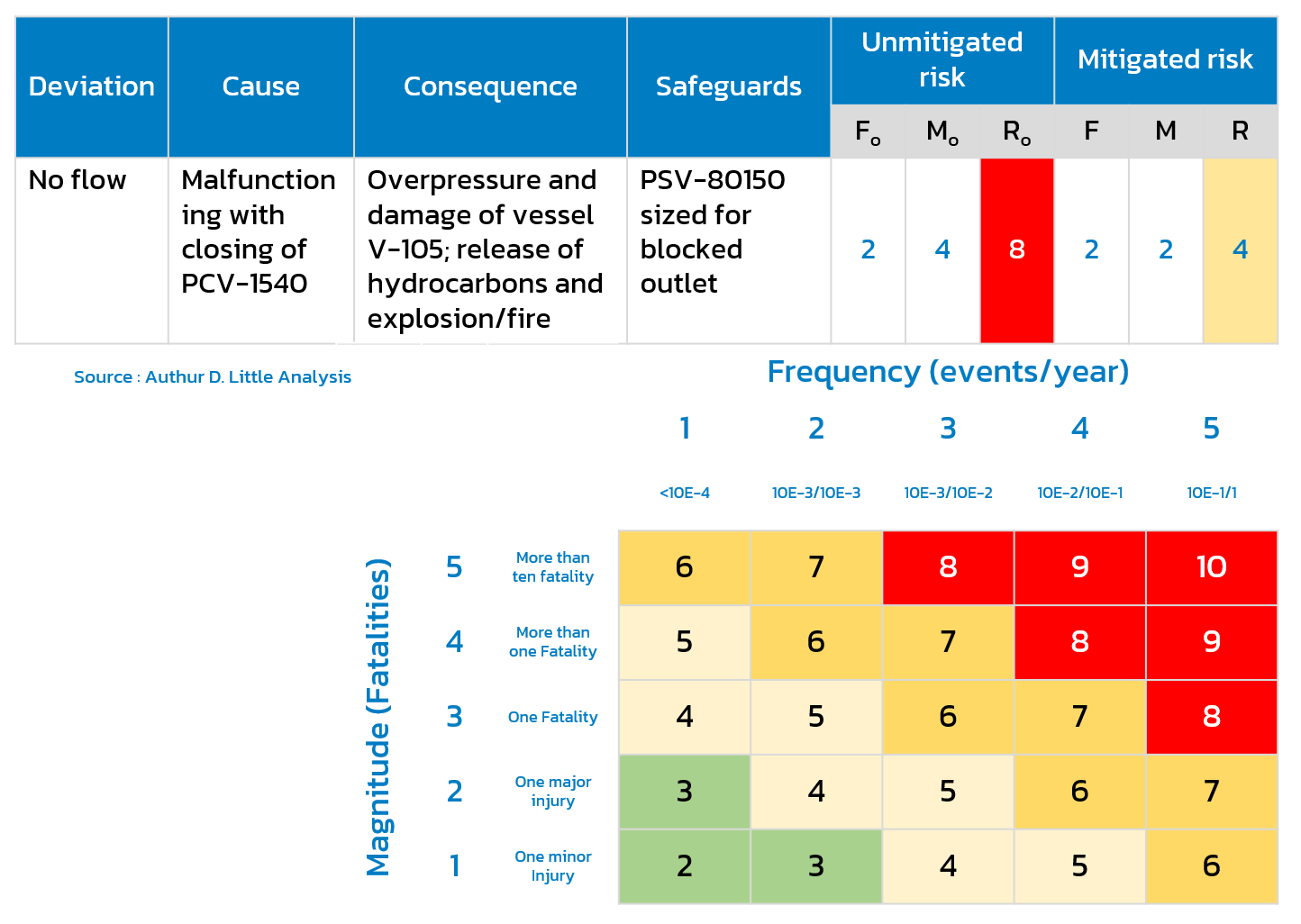
OSVARD offers specialized HAZOP facilitation services, providing experienced leadersand scribes to guide your team through the analysis. We tailor the HAZOP approach to the client’s specific process and objectives, whether it’s a newplant design review, an existing operation, or a management of change (MOC)review for a modification. Our process safety engineers ensure that allrelevant disciplines (engineering, operations, maintenance, etc.) are involvedso that a comprehensive set of perspectives is considered. We use proven guideword methodologies in line with the IEC 61882 standard for HAZOP. Each possible deviation in parameters (flow, temperature, pressure, level, etc.) is examinedto determine causes, consequences, existing safeguards, and any recommendedactions.OSVARD documents these findings clearly, prioritizing the recommendations byrisk level. We also assist with follow-up, helping clients implement theimprovements (for instance, updating operating procedures or specifying newsafety instruments). By engaging OSVARD for HAZOP studies, Asian companiesensure an impartial, systematic risk review that meets international bestpractices. Our formal, professional approach builds trust with stakeholders byshowing that process hazards have been proactively identified and addressed.
Visual Concept Suggestion: Adiagram of a HAZOP worksheet or process node review, showing a process vesselwith guide words applied (e.g. “No flow”, “High pressure”) and callout bubblesof the team brainstorming causes and consequences. This visual can illustratethe collaborative nature of HAZOP and how deviations are analyzed stepby step.
Dust Safety Science – HAZOP is astructured, systematic examination of a process to identify and evaluate risks,helping organizations prevent accidents and improve efficiencydustsafetyscience.com.
Dust Safety Science – Developed byImperial Chemical Industries in the 1960s, HAZOP has evolved into a standardsafety practice across industries worldwidedustsafetyscience.com.
NTNU (Norwegian Univ. of Science andTech) – A HAZOP is a qualitative technique based on guide-words, carried out bya multi-disciplinary team during a series of meetingsntnu.edu.