
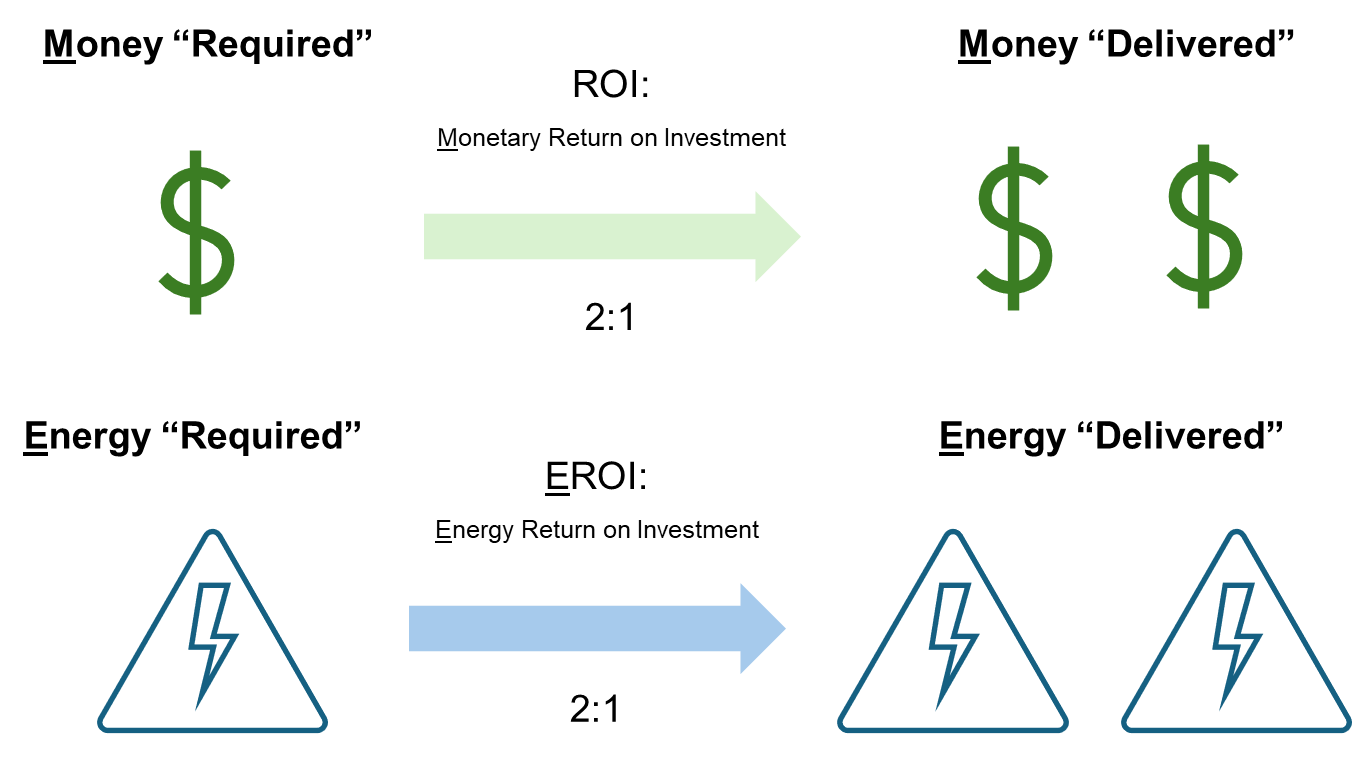
EROI measures how much energy we get back from an energy source compared to how much we put in to get it.

Think of it as a “bang for your buck” ratio but with energy. The higher the EROI, the more surplus energy we have to use for everything else in society.
The concept of EROI helps us gauge which energy sources are truly sustainable in the long run. High EROI sources, like early oil, powered industrial revolutions and massive economic growth. Today, we need to carefully consider the EROI of renewables and other emerging technologies to ensure they’re up to the task of supporting modern civilization without draining our energy reserves too quickly.
In essence, EROI isn’t just a number—it’s a fundamental metric that influences how we live, grow, and innovate. Keeping an eye on it helps us make smarter choices about our energy future, ensuring we have enough surplus to keep society moving forward.
Imagine life in the 1300s, most energy came from human and animal labor. Fast forward to the Industrial Revolution, and things changed with the discovery of coal, and later oil and natural gas. These fossil fuels had incredibly high EROI, meaning we got a lot of energy for very little effort. This surplus powered rapid industrial growth and improved living standards.
By the 20th century, fossil fuels were the backbone of modern economies. Early oil extraction was especially efficient, driving technological advancements and economic growth. However, as the easiest oil reserves depleted, we had to drill deeper and use more complex methods, lowering the EROI.
By the late 20th and early 21st centuries, this trend was clear. The EROI for fossil fuels was declining, meaning we spent more energy just to get energy. In the 1990s, the UK’s energy sector used about 6-7% of the country’s energy, but this percentage has been rising, potentially exceeding 10% in the future.
However, as we tap into more challenging energy sources, the EROI drops. We’re spending more energy just to get energy. It’s like our farmer now needing twice the effort to produce the same amount of food because the soil isn’t as fertile anymore. As the EROI drops, more of our total energy budget gets eaten up by the energy sector itself, leaving less for everything else. This situation is what experts call the “Net Energy Cliff.”
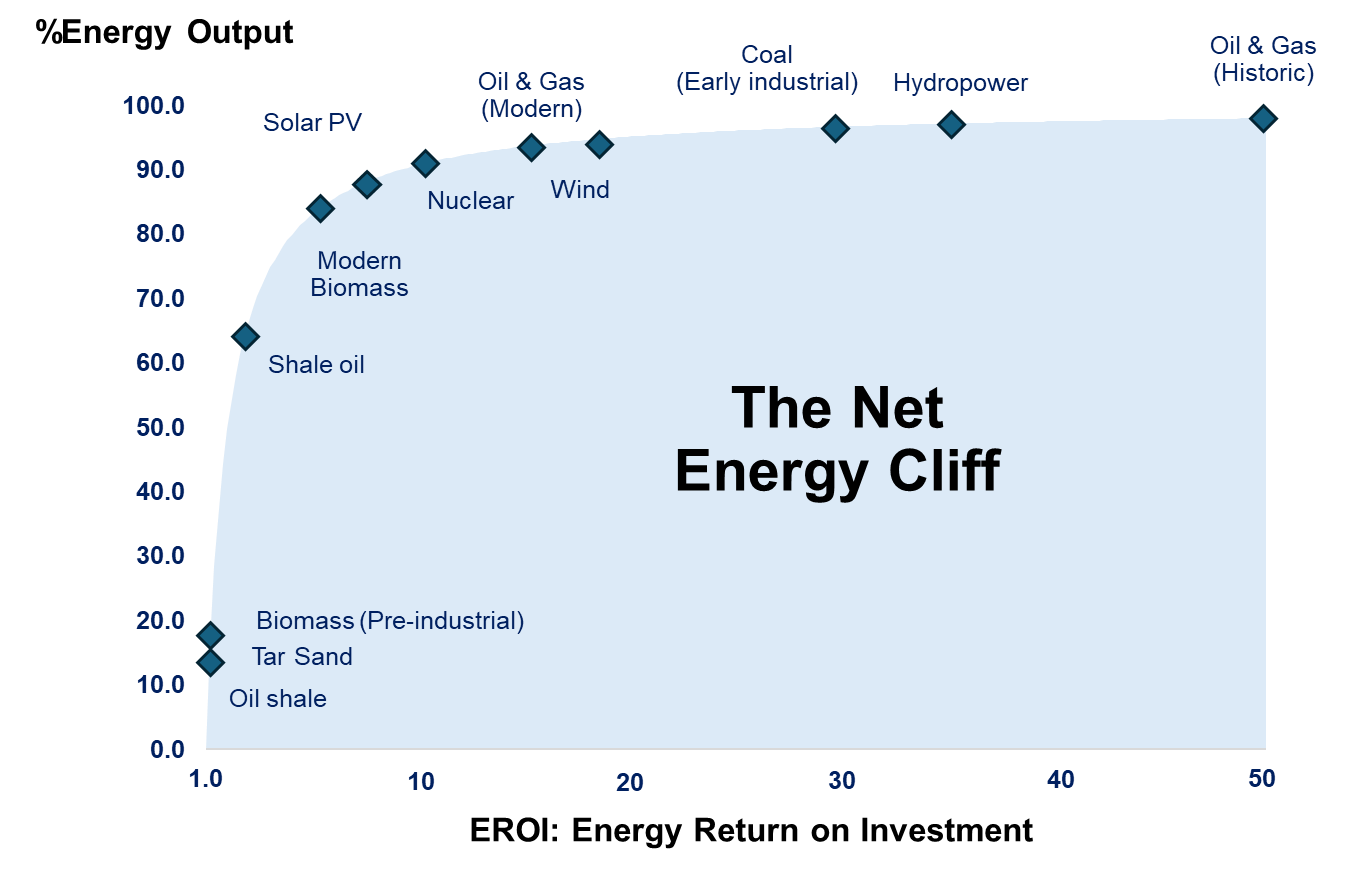
The basic idea of EROI is simple: it’s the ratio of energy returned to energy invested. But here’s where things get tricky. Imagine you’re trying to measure the fuel efficiency of a car. Do you only count the gas it uses, or do you also factor in the energy used to build the car, maintain it, and eventually scrap it? The same kind of questions apply to EROI.
Different studies use different boundaries for their calculations. Some might only look at the energy needed to extract oil from the ground. Others might include the energy used to refine and transport that oil. This leads to wildly different EROI values for the same energy source.
Then there’s the issue of non-energy inputs. Think about the machinery used in energy extraction. Do we convert the cost of building and maintaining that machinery into an energy equivalent and include it in our calculations? Some studies do, while others don’t, adding another layer of variability.
Another complexity is the type of energy we’re looking at. Fossil fuels like oil and coal are stored energy—burn them when you need them. Renewables like wind and solar generate kinetic energy, which you need to use or store right away. These differences affect how we perceive and calculate their EROI.
Also, consider the efficiency at different stages. Extracting oil is one thing, but refining it into gasoline and getting it to your car is another. Each step has its own energy costs and efficiency losses, complicating the EROI calculation.
In a nutshell, calculating EROI involves many variables and choices about what to include, making it a complex and often debated metric.
The EROI of our energy sources drops. We’re now spending more and more of our total energy budget just to get the energy we need. It’s like if you had to work twice as hard to bring home the same paycheck—you’d have less time and energy for everything else. For society, this means less energy available for growth, innovation, and maintaining our quality of life.
The low EROI can slow down economic growth because more resources are tied up in energy production. Industries might struggle with higher operational costs (higher prices for goods and services). Wealthier nations and communities might still afford the higher energy costs, but poorer ones could struggle even more.
There’s also the environmental angle. As we dig deeper and go to more extreme lengths to extract energy, the environmental impact can increase. Think about deep-sea drilling or tar sands extraction that carry higher risks for environmental damage.
And then there’s the issue of energy security. Relying heavily on low EROI energy sources can make us more vulnerable to supply disruptions. If we need to import more energy because domestic sources are too costly or depleted, we become dependent on other countries, which can be a risky game.
The views and opinions expressed in this Linkedin article are solely my own and do not represent the views or opinions of my current employer. This article is a personal reflection and does not involve any proprietary or confidential information from my current company. Any similarities in ideas or concepts presented in this article to my current company’s work are purely coincidental.