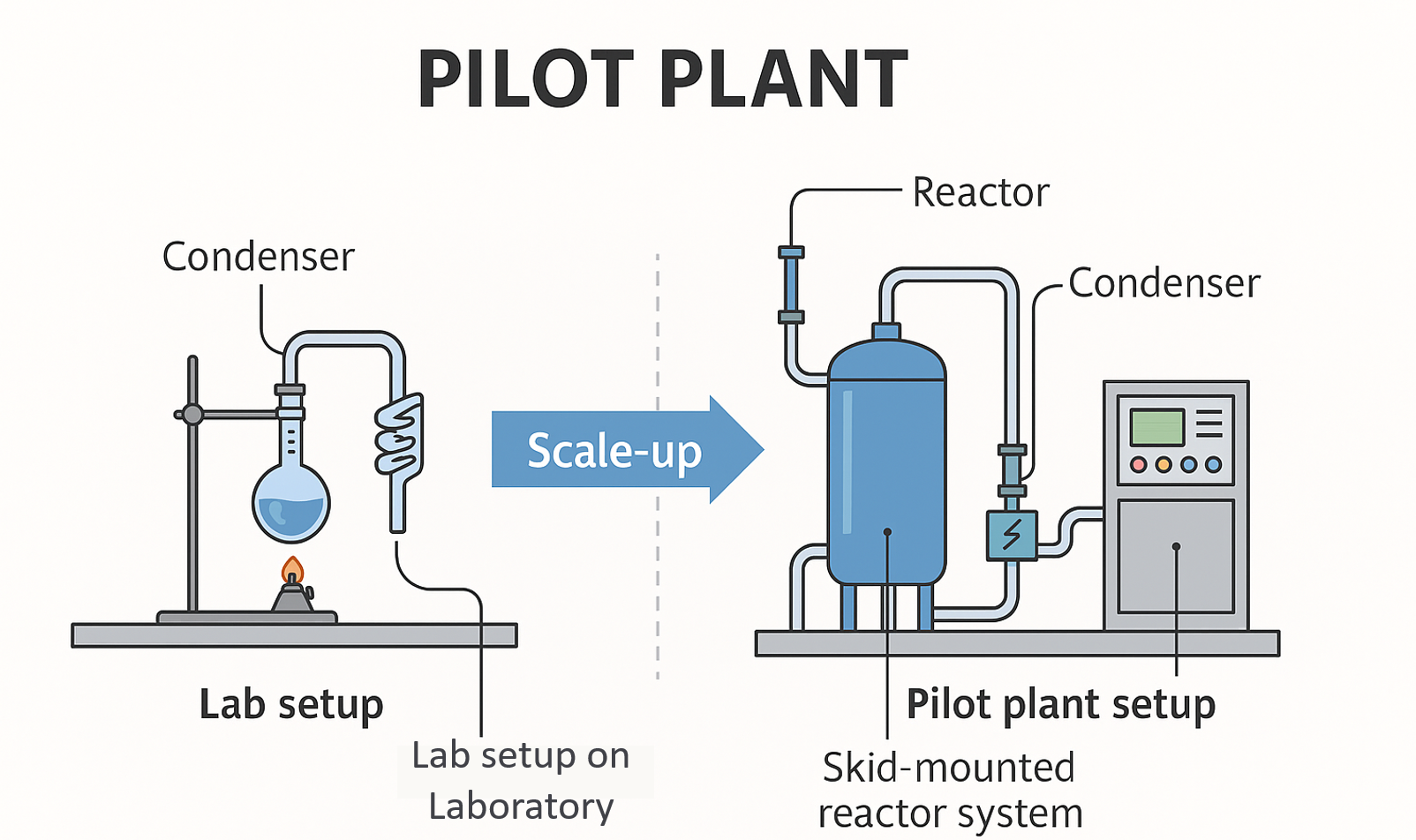
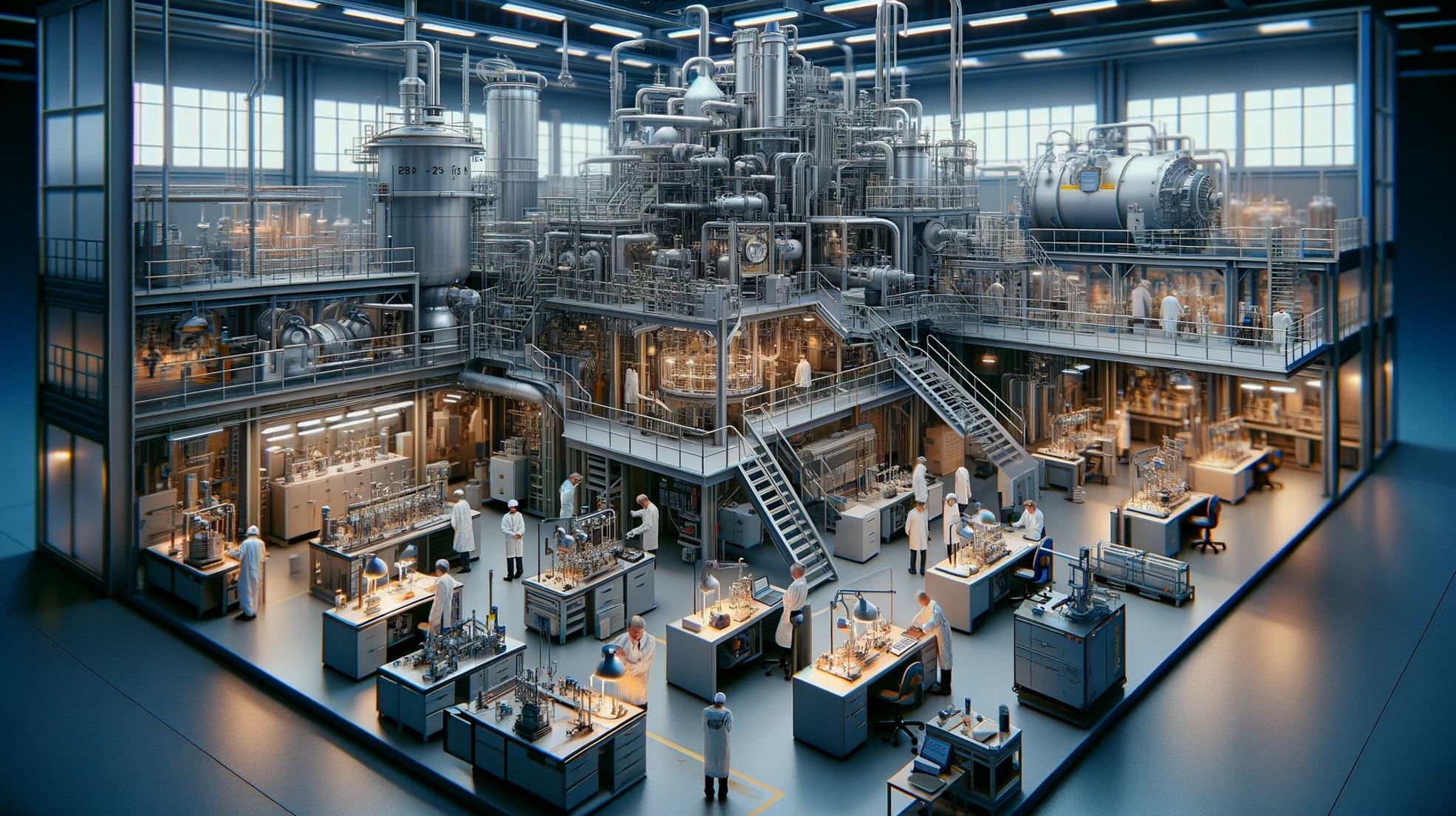
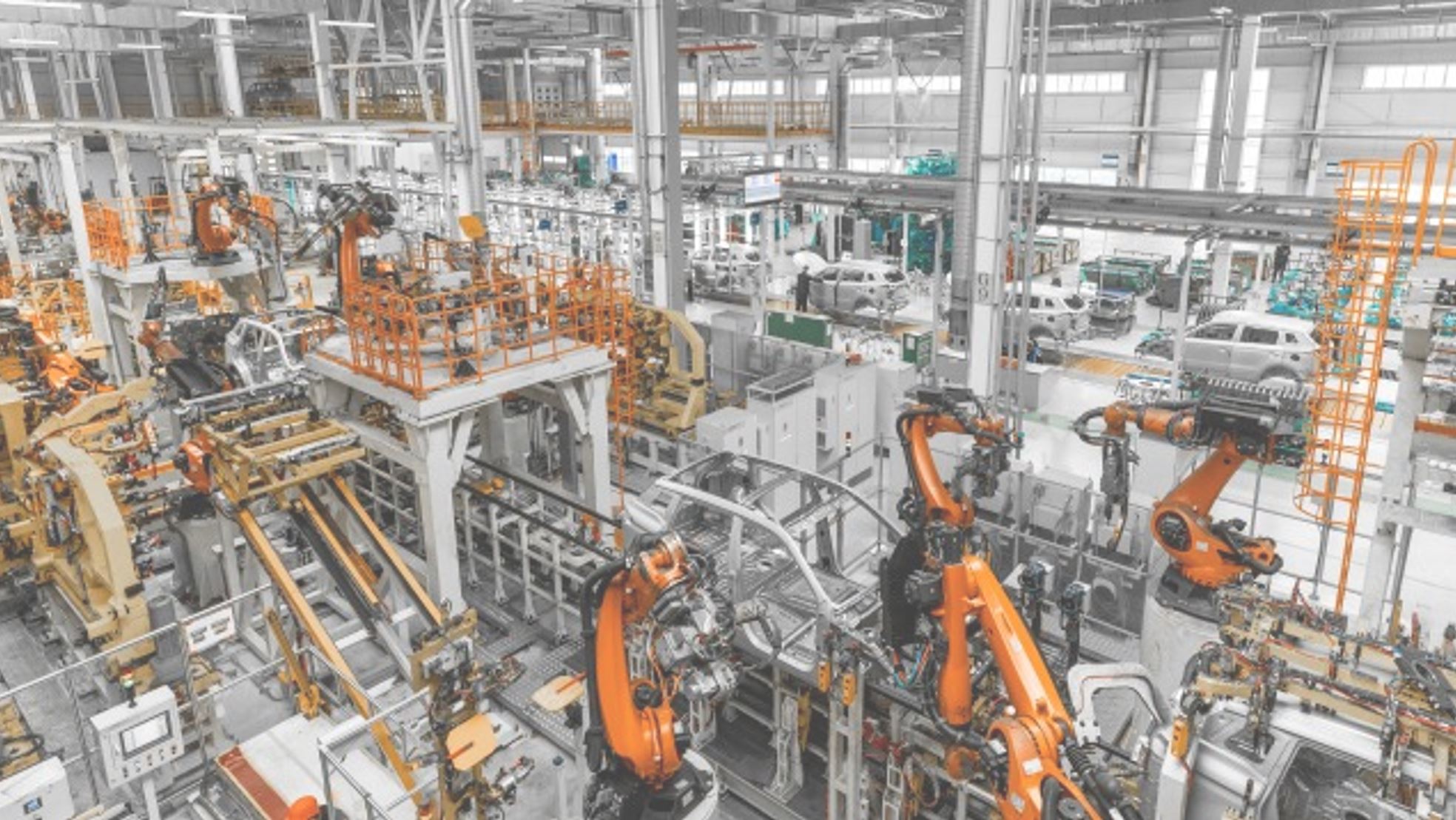
A Pilot Plant is the bridge between laboratory success and full-scale production. It is a pre-commercial system, usually on the order of tens of liters to a few hundred liters in capacity, where processes are tested under more realistic conditions. OSVARD’s Pilot Plant services take the data and concept proven in the lab and translate them into a working model of the process at a larger scale.
This is a critical step in scale-up, as a pilot plant provides the first window into continuous or scaled operations. It allows our engineers and the client to observe how reactions, separations, or other unit operations perform when scaled up, and to identify any phenomena that were not evident at lab scale.
Pilot plants are often called the workhorses of process development. In this phase, the objective shifts to verification and optimization: we want to confirm that the process can achieve the desired output, efficiency, and quality on a semi-industrial scale. For example, a biotech company that produced a few grams of product enzyme in the lab now needs to consistently produce kilograms in a pilot bioreactor, or a chemical process that worked in a 1 L flask needs to be demonstrated in a 50 L continuous reactor.
OSVARD designs pilot systems with industrial-grade equipment (reactors, mixers, heat exchangers, control systems) to closely emulate real production conditions while still being flexible and safe for experimental adjustments.
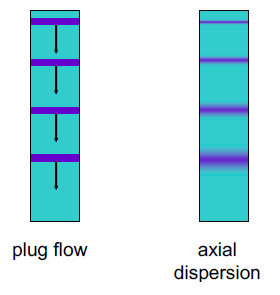
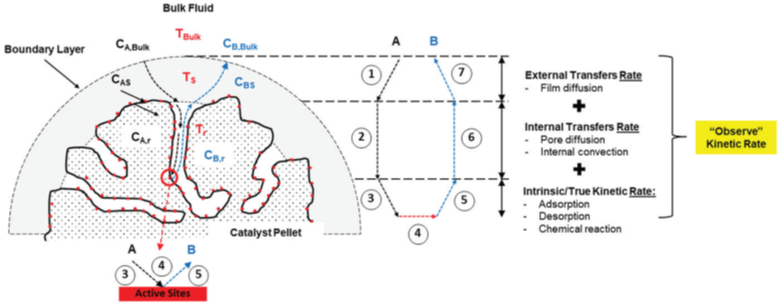
One of the key advantages of a pilot plant is risk reduction for scale-up. Running a process continuously on a pilot scale for days or weeks can reveal issues in reaction kinetics, heat transfer, mixing, or catalyst life that were not apparent in short lab tests. It provides data on yields and selectivity and can uncover how factors like recycling of unreacted materials or impurities build-up might affect the process.
OSVARD equips pilot plants with comprehensive instrumentation so that every important parameter is measured. This data is invaluable for refining design calculations and scaling rules for the eventual commercial plant. As noted in industry literature, a pilot facility effectively acts as the bridge between theory and practice, turning a conceptual idea into a functioning reality at scale. It increases the Technology Readiness Level (TRL) of a process by operating in a real-world environment.
OSVARD’s approach to pilot plant projects is holistic and collaborative. We begin with a detailed engineering design tailored to the client’s process, often creating process flow diagrams and P&IDs that capture all the necessary equipment and controls. Our engineers consider practicalities like materials of construction (ensuring that if a certain alloy or polymer was used in lab apparatus, an appropriate scalable material is chosen for the pilot) and safety systems.
We also incorporate automation and control systems so the pilot can mimic the continuous monitoring of a plant. For instance, if scaling up a food pasteurization process, the pilot unit would include real-time temperature and flow controls to ensure the process conditions are achieved just as in a full plant scenario.
By constructing pilot plants in Thailand, OSVARD serves the growing innovation needs of Asia’s chemical, energy, biotech, and food sectors. We fabricate these systems using a modular design where possible – assembling skid-mounted units that can be tested at our facility and then shipped to the client’s site. Throughout fabrication, we perform rigorous checks and a Factory Acceptance Test (FAT) to verify everything works per the design before delivery.
Once operational, the pilot plant can run extended trials. For example, an energy startup might operate a pilot pyrolysis reactor continuously for a month to gather data on catalyst stability and product quality. Such extended runs are feasible at pilot scale and can produce enough output for evaluation (or even sampling to potential customers) without the enormous expense of a full commercial run.
In summary, OSVARD’s Pilot Plant service transforms lab-proven concepts into practical, running systems. We emphasize careful scaling of physical and chemical parameters, comprehensive data collection, and maintaining flexibility for experimentation. This ensures that by the end of the pilot phase, our clients have a validated process and a wealth of operational knowledge.
A successfully executed pilot plant instills confidence that the process can be scaled up further – it is a proven “half-step” where learning and optimization occur, significantly de-risking the path to a demonstration plant or commercial facility.