Key points to consider when upgrading from Lab-scale beakers to large-scale process system

On this Page :

From Beaker to Plant: What Really Changes When You Scale Up

Moving a process from a 500-mL flask to a 5 000-L reactor is not about multiplying ingredient weights. Geometry, fluid flow, heat removal, safety margins, and even business economics all shift in non-linear—and sometimes counter-intuitive—ways. Below are the six pillars OSVARD always reviews before any scale-up step.


1. Geometry Drives Everything

A vessel’s volume grows faster than its surface area, so the ratio of area-to-volume falls off as equipment gets bigger. In the lab you could whisk away reaction heat through a thin glass wall; in a plant reactor hot spots may appear because the surface available for cooling has scarcely kept pace with the bulk. Our engineers often add jackets, coils, or extra baffles—not simply “more volume”—to restore the right thermal balance and mixing profile.


2. Mixing and Kinetics Shift Regimes

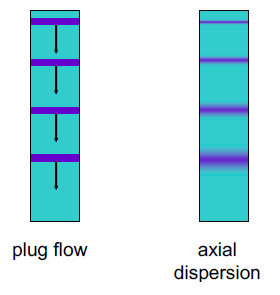
What was fully turbulent with a magnetic stir bar can become laminar pockets in a large tank if impeller power per volume dips too low. To keep reaction kinetics or oxygen transfer on target, we match dimensionless numbers such as Reynolds, Power/Volume, or Tip Speed, and we select impeller types (multi-stage, high-shear, or sparged) that maintain uniformity at scale.


3. Heat Removal Becomes a Design Project

Heat transfer coefficients seldom scale linearly. A reaction that felt “trivial” to cool in a flask may threaten runaway in production. We run pilot tests or CFD models to verify heat-transfer rates, then size jackets, external exchangers, or recycle loops accordingly. Sometimes the fix is as simple as increasing agitation; other times, adding surface area is the only safe route.


4. Materials and Hardware Don’t Scale One-for-One

Lab glass, Hastelloy coupons, or syringe filters are rarely practical at the tonne level. We evaluate corrosion rates, mechanical stresses, cleanability, and cost to pick fit-for-purpose alloys, seals, filters, and pumps. A bench-top filter cake that clears in minutes can demand an entirely different technology—centrifuge, belt filter, or press—when flows are 1 000× larger.


5. Control and Safety Take Center Stage

Bigger volumes mean greater stored energy and longer time constants. Control loops that cycled every ten seconds in the lab might now take ten minutes to respond. OSVARD performs fresh HAZOP studies, re-tunes controllers, and adds instrumentation so operators (or APC systems) can manage those slower dynamics without drifting outside safe limits.


6. Economics and Regulations Grow Exponentially

Grams of exotic catalyst may cost pennies in R&D but millions at scale. Likewise, litres of solvent waste turn into truckloads that trigger environmental permits. Early techno-economic analysis and regulatory mapping keep the business case intact and prevent late-stage surprises.


Start With the End in Mind

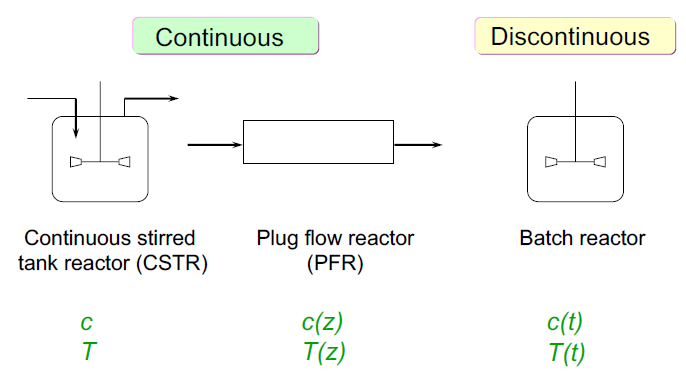
Whenever possible we mirror the final flow pattern, control philosophy, and materials right from the pilot stage. If the destination is a continuous plant, we prototype continuous—even at the litre scale. This foresight turns scale-up from a leap of faith into a well-lit staircase.


The Takeaway

Scaling is part physics, part creativity, and wholly unforgiving of shortcuts. By addressing geometry, mixing, heat, materials, control, and economics together, OSVARD guides clients from lab bench to production line without the usual stumbles. Plan early, test smart, and let scale amplify your success—not your headaches.

Connect with our
Competency
Connect
featured insights
Process Scale-Up
Article
Bridging the Gap – Understand a Key Differences Between a Small Beakers to Larger Sizes.
The journey from a laboratory experiment to a commercially viable process is challenging step i.....
OSVARD
Process Scale-Up
Article
Bridging the Gap – Understand a Key Differences Between a Small Beakers to Larger Sizes.
The journey from a laboratory experiment to a commercially viable process is challenging step i.....
OSVARD
Engineering Design
Article
Why is Ideal flow pattern crucial for upscaling Fixed-bed reactor ?
The challenge in fixed-bed reactor scale up is partial similarity of laboratory, pilot, and commerci
OSVARD
Chemical Technology Development
Article
H2 or kWh – Evaluating the Potential of Hydrogen and Electron Economies in Decarbonization
Hydrogen's potential for decarbonization lies in its versatility. It can be produced from water.....
OSVARD
Engineering Design
Article
Industrial Heat Pumps: Even It is Hard to Implement, But Non-Negotiable.
An industrial heat pump (IHP) is a large-scale device designed to capture and repurpose heat fro....
OSVARD
Engineering Design
Article
Death of Elon Musk’s Hyperloop, The Next is Direct-air Capture (DAC)
Hyperloop One, initially a high-profile venture, raised over $450 million and constructed a sm....
OSVARD
Process Scale-Up
Article
What’s Challenges in Scaling up or down of Single-phase Catalytic Fixed-bed Reactors ?
Fixed-bed reactors is commonly used in commercial-scale. Laboratory-scale fixed-bed reactors might b
OSVARD
Safety Engineering
Article
The Death Valley of Brand-new Technology Development.
In the bottom-up development approach, the multi-stage process starts in the laboratory, moves to th
OSVARD
Chemical Technology Development
Article
Energy Return on Investment (EROI), Issue of Sustainability
EROI measures how much energy we get back from an energy source compared to how much we put in t....
OSVARD
Chemical Technology Development
Article
Why Do Scaling Methods Impact your Process Development ?
Scaling up is a critical process in many industries, including manufacturing, chemical processin....
OSVARD
Process Scale-Up
Article
Strategies for Reducing Cost and Schedules in Pilot Plants
Reducing capital costs and schedules in pilot and demonstration plants is crucial for the succe.....
OSVARD
Chemical Technology Development
Article
10 Common belief but False Idea on Net Zero Emission
People often interpret "Net Zero" as an end state where no emissions are being produced at all. This
OSVARD
Process Scale-Up
Article
What are Main Differences between Lab, Pilot, Demonstration and Commercial Plant in A Nutshell ?
Nowadays, many companies have been constantly transforming from production-and operation-based compa