Ergonomics is the science of fitting the job to the worker, and it plays a vital role in preventing work-related musculoskeletal disorders (MSDs) such as back injuries, carpal tunnel syndrome, and neck/shoulder pain. Tasks that involve heavy lifting, repetitive motions, awkward postures, or excessive force can strain workers’ muscles and joints over time. The risk of injury depends on factors like how the task is performed, how often and how long it’s done, and the physical effort requiredosha.gov. Poor ergonomics not only lead to injuries but also fatigue and human errors, affecting productivity. The good news is that ergonomic improvements can greatly reduce these risks. Adjusting the workstation layout, providing mechanical aids (for lifting or tool support), rotating tasks, and training workers in safe techniques are typical interventions. According to OSHA, implementing ergonomics – fitting the job to the person – helps lessen muscle fatigue, increases productivity, and reduces both the number and severity of work-related MSDsosha.gov. In fact, work-related musculoskeletal disorders are among the most frequently reported causes of lost or restricted work timeosha.gov. This means companies have a lot to gain by addressing ergonomic risks: fewer injuries and absences, lower medical and compensation costs, and a more comfortable, efficient workforce.
OSVARD’s Ergonomic Risk Evaluations involve a systematic assessment of work activities to pinpoint where there may be excessive strain on the body. Common ergonomic risk factors include forceful exertions (lifting heavy loads or pushing/pulling with force), repetitive motions (performing the same hand movement or task repeatedly without sufficient rest), awkward or static postures (bending, twisting, or holding a position for long periods), and vibration (from power tools or machinery). For example, in a manufacturing setting, an assembly worker might repetitively reach above shoulder height to grab parts – this could lead to shoulder fatigue or injury over time. In an office, a computer user with a non-adjustable chair might develop back or wrist strain from a poor sitting posture. Our team uses established tools and guidelines: we might employ checklists, the NIOSH Lifting Equation for manual handling tasks, or rapid assessment tools like RULA and REBA for postural analysis. We also often involve the workers themselves – since they know their tasks best – in identifying pain points or difficulties. This aligns with recommended practices that encourage worker participation in finding ergonomic solutionsosha.gov. By measuring and observing how tasks are done, we determine which specific work elements pose a risk of MSDs. We consider not just the primary task but also environmental factors (heat, lighting) and work organization (shift length, break schedules) that can influence ergonomic stress.
After pinpointing issues, OSVARD provides practical recommendations to control ergonomic hazards. Solutions follow the hierarchy of controls: first, we look at engineering controls – can the workstation or tool be redesigned? For instance, we might recommend height-adjustable workbenches, lifting devices or conveyors to eliminate heavy manual lifts, or redesigning a process to eliminate a needless repetitive step. We also address administrative controls, such as adjusting work-rest cycles (e.g., ensuring workers doing intensive tasks get micro-breaks or rotate to less demanding tasks to recover). Training is another component: OSVARD can train employees on proper lifting techniques, stretching exercises, or ergonomic best practices relevant to their job. Our ergonomic evaluations often result in simple but effective fixes: relocating frequently used items to reduce awkward reaching, providing ergonomic chairs and keyboard setups in offices, or adding anti-fatigue mats for standing workstations. We quantify the improvements where possible – for example, showing that a modification will cut the required force or awkward angle by a certain percentage, thereby reducing injury risk. Importantly, OSVARD helps companies establish an ongoing ergonomics process. We encourage setting up an internal ergonomics team or incorporating ergonomics into regular safety inspections. By fostering a culture where employees can report discomfort early and suggest improvements, companies can catch issues before they become injuriesosha.gov. Overall, OSVARD’s ergonomic risk evaluations and solutions lead to healthier employees and a more efficient workplace. When workers are comfortable and pain-free, they perform better and are less likely to suffer downtime, which directly benefits the organization’s bottom line.
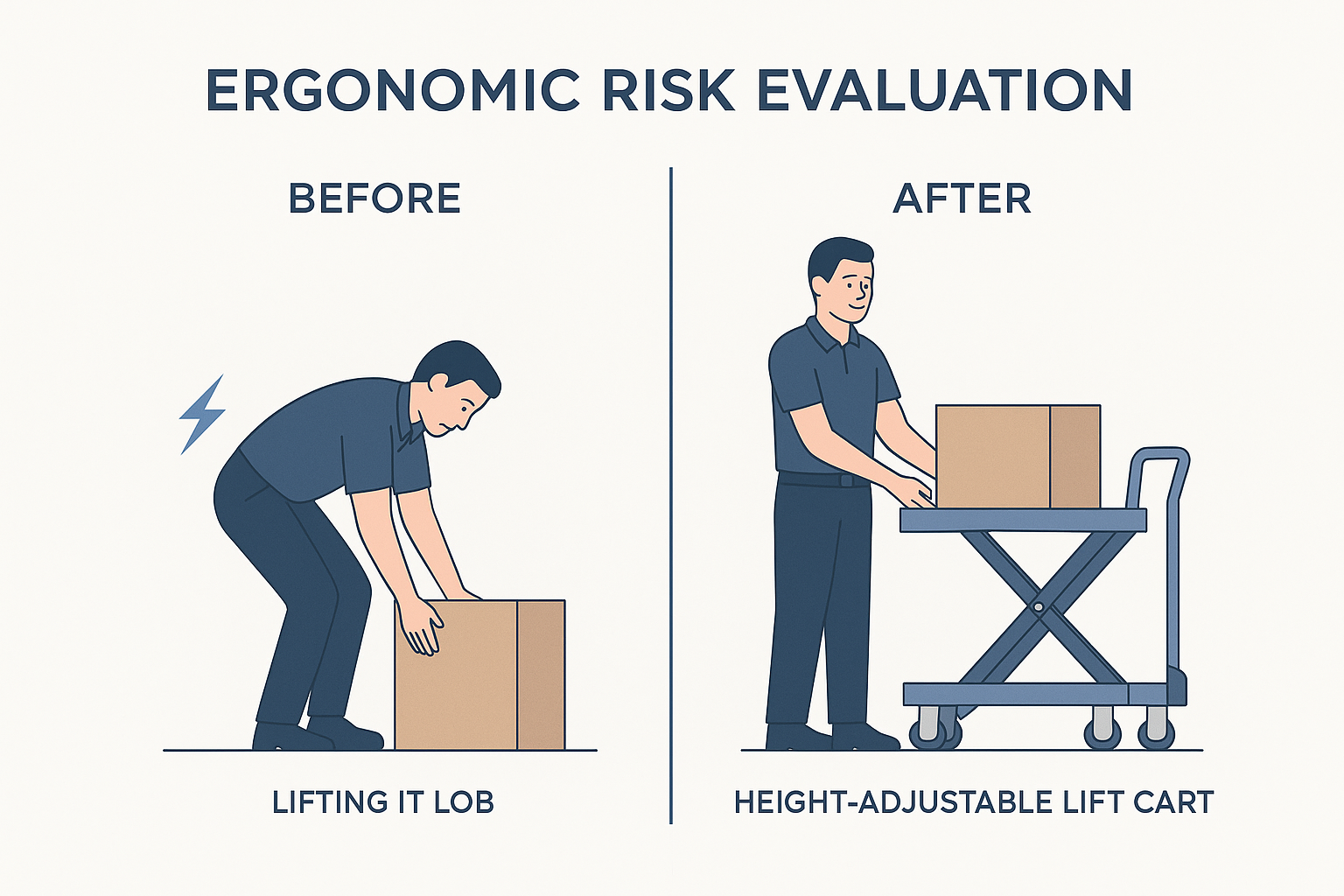
OSHA – Ergonomics (fitting a job to a person) lessens muscle fatigue, increases productivity, and reduces the number and severity of work-related MSDsosha.gov.
OSHA – Work-related musculoskeletal disorders are among the most frequent causes of lost work time, but they can be substantially reduced by applying ergonomic principlesosha.gov.
OSHA – Key elements of an effective ergonomics process include management support, worker involvement, training, and early reporting of symptoms to address issues before they worsenosha.govosha.gov.