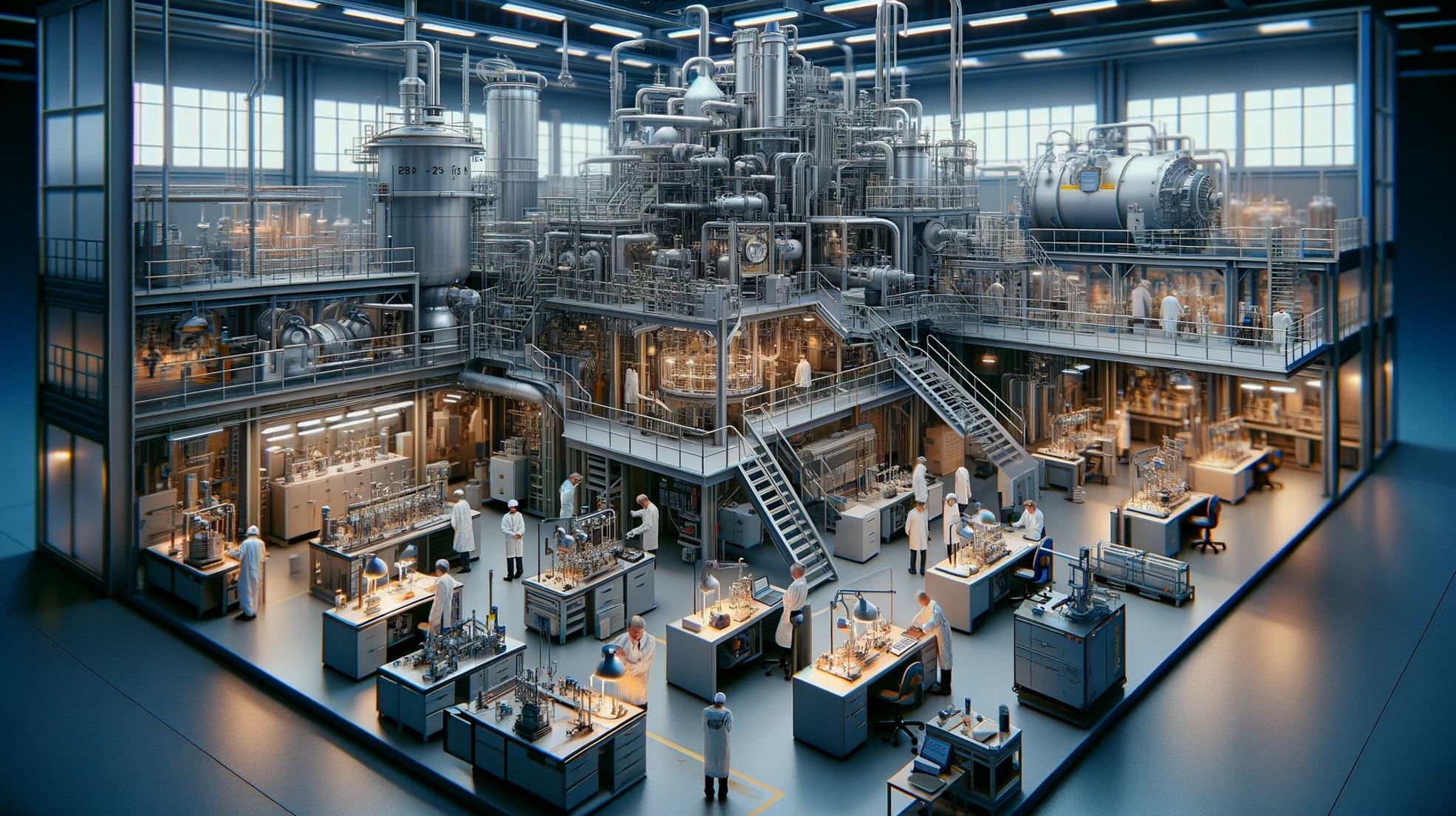
Imagine watching a living 3-D replica of your plant where every pump pulse, tower temperature, and compressor vibration updates in real time. That’s not sci-fi, it’s the day-to-day reality of facilities running on OSVARD’s Plant Digital Twin platform. By merging high-fidelity process models with live sensor feeds, the twin becomes a nerve-center that spots inefficiencies, flags failures before they happen, and guides operators through “what-if” scenarios—all without risking a single minute of production.
Continuous data sync from DCS, SCADA, and IoT devices—so the virtual plant never drifts from reality.
Embedded analytics that compare real performance against optimal profiles every few seconds.
A common workspace where operations, maintenance, and engineering see the same truth instead of juggling separate spreadsheets and paper P&IDs.
Operators no longer wait for shift reports to discover a distillation column is edging toward flooding or a pump is slipping off its curve. Dashboards built on the twin visualise:
Key performance indicators—yield, energy intensity, cycle time—updating in real time.
Anomaly alerts that rank issues by economic impact or safety risk, guiding teams to the right problem first.
Context-rich drill-downs: click a flashing heat-exchanger icon and see design specs, last cleaning date, and current fouling factor in one screen.
Early users report catching deviations minutes, not hours, after they start—cutting waste and scrapping far before it snowballs.
Historical sensor streams teach the twin to recognise subtle fingerprints of failure:
A 2 % uptick in compressor shaft vibration that usually precedes bearing wear three weeks later.
A slow, steady rise in tower ΔT signalling tray fouling long before overhead purity slips.
Micro-changes in motor current that map to seal degradation on agitators.
When those signatures emerge again, the twin pops a predictive alert and can even raise a work order in the CMMS. Plants have cut unexpected shutdowns by 30–50 % and extended equipment life simply by acting on the twin’s early warnings.
Data & sensor survey – we map every tag, historian, and gap; recommend low-cost IoT sensors where needed.
High-fidelity modelling – steady-state Aspen® flowsheets for mass-energy accuracy, dynamic modules for reaction or startup transients, mechanical models for rotating assets, and optional 3-D CAD overlay for spatial context.
Secure, bi-directional data bridge – firewall-friendly protocols keep OT networks safe while streaming live points to the cloud or on-prem twin.
Analytics layer – machine-learning anomaly detectors plus rule-based logic from OEM thresholds; outputs ranked by criticality.
Role-based dashboards – operators see live KPIs, maintenance sees health scores, managers get financial impact at a glance.
Training & evolution – OSVARD trains staff, tunes algorithms with fresh data, and updates the twin whenever you revamp equipment.
Petrochemical compressor – twin identified bearing wear pattern 10 days pre-trip; planned swap avoided a 48-hour outage worth USD 0.5 M.
Specialty chemical plant – energy model flagged under-performing exchanger; proactive cleaning plus retrofit cut unit energy 5 %, worth USD 120 k per year.
Operator readiness – simulated cooling-water loss on the twin; team drilled until they could stabilise temps in 90 seconds during the live test.
Maintenance integration – twin’s alert API pushes SAP PM work orders automatically, closing the loop from detection to action without clerical lag.
Level the playing field – you don’t need a megasite budget to deploy the same technology used by industry giants; OSVARD scales twins to fit your plant’s size and tag count.
Rapid ROI – most clients recoup the investment through avoided downtime or energy savings within 12–18 months.
Future-proof foundation – the same digital backbone can later host debottlenecking studies, carbon-intensity tracking, or AI optimisation apps.
“When your process has a digital twin, you’re not guessing—you’re conversing with evidence, in real time.”
Ready to see your plant in living digital colour—and to hear it whisper “fix me before I fail”? OSVARD’s Plant Digital Twin service turns raw data into foresight, transforming everyday operations into a predictive, self-optimising powerhouse.